

Creatine for women: what you need to know in 2026
Creatine is one of the most researched supplements available, and the evidence for women is clear: it supports muscle strength, cognitive function, and bone health across every stage of life. A daily maintenance dose maintains tissue saturation, and consistent daily intake over at least four weeks is what produces measurable results. The fear that creatine causes bulky muscles or significant weight gain in women is not supported by research. At standard doses, any initial weight change reflects increased cellular hydration, not fat or muscle bulk.
Key facts at a glance:
- Creatine improves strength, endurance, and recovery in women
- It supports mood, memory, and focus, particularly after poor sleep
- Post-menopausal women may see muscle and bone benefits when combining creatine with resistance training
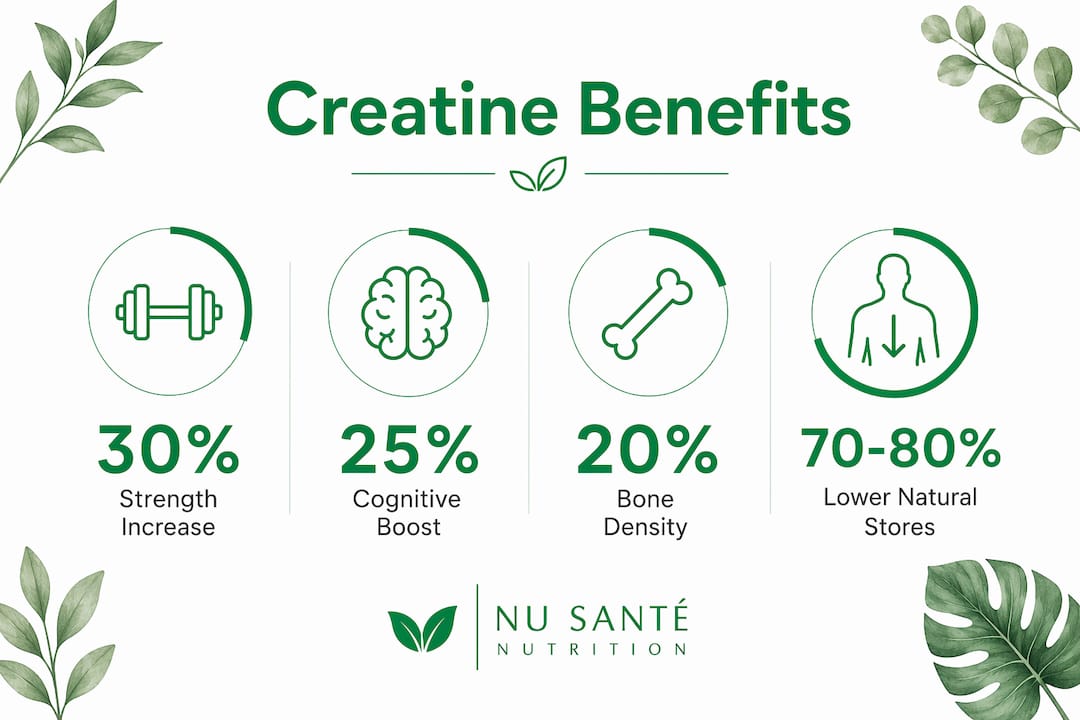
- Women have 70–80% lower natural creatine stores than men, making supplementation particularly relevant
- Standard maintenance dose: a moderate daily amount; no loading phase required, though loading accelerates saturation
- Creatine monohydrate is the most studied and widely recommended form
How creatine works in the female body
Creatine functions as an energy reservoir. During high-intensity activity, the body burns through adenosine triphosphate (ATP) rapidly. Creatine, stored in muscle as phosphocreatine, donates a phosphate group to regenerate ATP, allowing muscles to sustain effort for longer before fatigue sets in.
Women start at a physiological disadvantage here. Females exhibit 70–80% lower endogenous creatine stores compared to males, which means the gap between baseline and optimal saturation is wider. Supplementation closes that gap more meaningfully for women than it does for men.
Hormonal fluctuations add another layer. Oestrogen influences creatine kinetics and phosphocreatine resynthesis, so creatine metabolism shifts across the menstrual cycle, during perimenopause, and after menopause. During the luteal phase, protein turnover rises, and creatine supplementation may help preserve muscle protein during this window. These hormone-related changes are precisely why researchers at the University of Hertfordshire and elsewhere have argued that creatine is not just a gym supplement for women. It is a metabolic support tool.
Creatine also supports brain function. The brain is an energy-hungry organ, and phosphocreatine plays a role in maintaining neurological energy homeostasis. This is why the cognitive benefits of creatine, particularly for mood and focus, are increasingly recognised alongside its physical ones.
Forms of creatine worth knowing:
- Creatine monohydrate: the gold standard. Backed by decades of research, cost-effective, and well-tolerated
- Creatine HCl: more soluble, sometimes marketed as easier on digestion, though evidence for superiority over monohydrate is limited
- Buffered creatine (Kre-Alkalyn): claims reduced breakdown in the stomach, but research does not consistently support advantages over monohydrate
- Creatine gummies: a newer delivery format offering convenience and palatability, with the same active ingredient as powder forms
Evidence-based benefits of creatine for women’s fitness, brain, and bone health
The research on creatine women benefits spans three distinct domains: physical performance, cognitive health, and skeletal integrity. Each has a meaningful evidence base, though the strength of that evidence varies.
Physical performance
Creatine consistently improves strength and exercise performance in pre-menopausal women. A substantial body of literature confirms gains in muscle strength, power output, and recovery speed without marked changes in body weight. The International Society of Sports Nutrition (ISSN) recognises creatine monohydrate as the most effective ergogenic nutritional supplement for increasing high-intensity exercise capacity and lean body mass.

Vegetarian and vegan women tend to have lower dietary creatine intake because creatine is found almost exclusively in animal products. For this group, supplementation is particularly beneficial given the wider gap between dietary intake and optimal tissue levels.
Cognitive and mood support
Creatine’s role in brain energy metabolism makes it relevant beyond the gym. Research links creatine to improved cognitive function after sleep deprivation, and there is emerging evidence that it may reduce depressive symptoms when used alongside antidepressant therapy. For women experiencing brain fog, low energy, or disrupted sleep, higher doses in the 5–10g range may be needed to achieve brain tissue saturation. Muscle saturation and brain saturation are not the same target, and the dosing differs accordingly.

Bone health
Post-menopausal women face accelerated bone density loss as oestrogen declines. Some evidence suggests creatine combined with resistance exercise supports bone health in this group, though findings are not unanimous. The benefit appears most clearly when creatine is paired with resistance training rather than taken in isolation.
Common misconceptions addressed:
- Creatine does not cause significant water retention or bulky muscles in women at standard doses
- Any initial weight increase reflects cellular hydration, which is a positive physiological response
- Creatine is not a steroid and does not alter hormone levels
- The safety profile for women is strong, with no greater adverse effects than placebo when dosed appropriately
How to use creatine safely and effectively
Getting the dosage right matters more than timing. The standard approach is a maintenance dose of 3–5g daily, taken consistently. A loading phase (around 20g per day split across four doses for 5–7 days) accelerates saturation but is entirely optional. Without loading, tissue saturation is typically reached after four weeks of consistent daily intake.
Dosage summary:
- Maintenance: 3–5g daily
- Loading (optional): approximately 20g per day for 5–7 days, then 3–5g daily
- Cognitive support: 5–10g daily after a loading period may be needed for brain saturation
- Timing: pre-workout, post-workout, or any other time. Consistency matters far more than the clock
Mild side effects can occur, particularly during a loading phase. These include temporary digestive discomfort and a small, transient increase in scale weight from water. Both resolve quickly and are less common at standard maintenance doses.
Medical authorities advise that women who are pregnant, breastfeeding, or living with kidney or liver disease should not take creatine without medical clearance. Cedars-Sinai and the Cleveland Clinic both recommend consulting a healthcare provider before starting any new supplement if you have an existing health condition.
Pro Tip: Skip the loading phase if digestive sensitivity is a concern. A daily 5g dose reaches full muscle saturation within four weeks and produces the same long-term results with fewer side effects.
How creatine needs change across your lifespan
Creatine is not a one-size-fits-all supplement for women. Its benefits and the optimal approach shift depending on hormonal stage, age, and health goals.
| Life stage | Key consideration | Suggested approach |
|---|---|---|
| Reproductive years (pre-menopause) | Hormonal fluctuations affect creatine metabolism | 3–5g daily; consider higher dose in luteal phase |
| Perimenopause | Brain fog, mood changes, disrupted sleep common | 5–10g daily for cognitive support after loading |
| Post-menopause | Muscle and bone loss accelerate | High-dose loading (0.3g per kg body weight) combined with resistance training |
| Vegetarian or vegan | Lower dietary creatine baseline | Standard or slightly higher maintenance dose |
During the luteal phase of the menstrual cycle, elevated protein turnover means creatine may help preserve muscle protein. The evidence for this is preliminary but consistent with the broader understanding of creatine’s role in protein metabolism.
Perimenopause and menopause bring a specific set of challenges: declining oestrogen, increased risk of sarcopenia, mood instability, and cognitive changes. Hormonal changes during this period directly influence creatine metabolism, positioning supplementation as a practical support tool. For women navigating perimenopause symptoms, creatine is one of the few supplements with a credible evidence base for both physical and neurological support.
Post-menopausal women can see functional muscle strength improvements after short-term, appropriately dosed creatine loading combined with resistance training. Research published in the PMC lifespan review found that a loading period of 0.3g per kg of body weight daily for at least seven consecutive days produced gains in lean mass, muscle strength, and functional performance in women aged 60 and above. Low-dose chronic supplementation at 1–3g daily did not produce the same results, underlining the importance of dose adequacy in this group.
Key points for lifespan use:
- Creatine needs are not static. They shift with hormonal stage
- Brain saturation requires higher doses than muscle saturation
- Post-menopausal benefits are most pronounced with resistance training
- Gaps remain in the research on creatine across specific menstrual cycle phases
Creatine and common female health conditions or medications
Most healthy women tolerate creatine well, but certain health conditions and medications warrant attention before starting supplementation.
Kidney and liver health: Creatine is metabolised and excreted via the kidneys. Women with chronic kidney disease, reduced kidney function, or liver conditions should not take creatine without medical supervision. At standard doses in healthy women, creatine does not damage kidney or liver function. The concern applies specifically to pre-existing conditions, not to healthy individuals.
Medications that interact with creatine: Non-steroidal anti-inflammatory drugs (NSAIDs) such as ibuprofen and naproxen are commonly used by women for period pain. Combining these with creatine long-term may place additional strain on the kidneys, so caution is warranted. Diuretics, sometimes prescribed for blood pressure or fluid retention, can affect creatine’s osmotic effects and hydration balance. Women taking nephrotoxic medications (those that affect kidney function) should discuss creatine use with their GP.
Antidepressants: This is an area of emerging interest. Research suggests creatine may reduce depressive symptoms when used alongside certain antidepressants, particularly SSRIs. Rather than an interaction to avoid, this appears to be a potential benefit, though it should be discussed with a prescribing clinician before acting on it.
Thyroid conditions: Women with hypothyroidism or hyperthyroidism should be aware that thyroid function influences creatine metabolism. There is no evidence that creatine worsens thyroid conditions, but the interaction between thyroid hormones and creatine kinetics means a healthcare provider’s input is sensible.
Polycystic ovary syndrome (PCOS): Women with PCOS often have insulin resistance and altered muscle metabolism. Creatine’s role in supporting muscle energy and metabolic health may be relevant here, though direct research on creatine in PCOS populations remains limited.
The general principle: creatine has a strong safety profile for healthy women. The conditions above are not absolute contraindications in most cases, but they are reasons to seek medical advice rather than self-prescribe.
What UK-based research and guidelines say about creatine
The United Kingdom has contributed meaningfully to the evidence base on creatine, particularly through academic institutions and sports nutrition bodies.
Researchers at the University of Hertfordshire have been among those examining creatine’s benefits for women specifically, with work contributing to the understanding that creatine is a low-cost, practical tool for addressing common female health complaints including brain fog, low energy, and disrupted sleep. Their work aligns with the broader lifespan perspective research published in peer-reviewed journals.
The International Society of Sports Nutrition (ISSN), whose position stands are widely referenced by UK sports dietitians and nutritionists, classifies creatine monohydrate as the most extensively studied and clinically effective nutritional supplement for improving high-intensity exercise performance. UK-registered dietitians and sports nutritionists working within NHS and private practice settings increasingly reference ISSN guidance when advising women on supplementation.
The European Food Safety Authority (EFSA) has evaluated creatine safety and its authorised health claims relate specifically to physical performance in the context of short-duration, high-intensity exercise. EFSA’s framework requires substantiated evidence before any health claim can be made on a supplement label sold within the UK and EU markets, which means creatine products carrying performance claims have met a regulatory evidence threshold.
UK dietary surveys consistently show that women consume less dietary creatine than men, partly due to lower red meat and fish consumption on average. This dietary gap reinforces the case for supplementation among women who follow plant-based diets or simply eat less animal protein. A creatine powder or gummy format can bridge that gap without requiring dietary overhaul.
No UK-specific clinical trials on creatine in women have produced findings that contradict the international evidence base. The consensus across UK sports nutrition guidance, academic research, and regulatory frameworks supports creatine monohydrate as safe and effective for healthy women at doses of 3–5g daily.
Nu Sante Nutrition creatine gummies: convenient daily supplementation
Powder tubs and capsules work, but they require measuring, mixing, or swallowing multiple tablets. Nu Sante Nutrition’s Creatine Gummies offer the same active ingredient in a format that fits into a busy routine without the faff.

Each gummy delivers a pre-measured dose of creatine monohydrate, the gold-standard form backed by the research covered throughout this article. No scoops. No chalky texture. No second-guessing the dose. Nu Sante Nutrition formulates its gummies with quality and consistency in mind, using ingredients that support fitness performance, energy, and overall wellbeing. The product sits within a broader range that includes Ashwagandha, Magnesium, Collagen, and Multivitamin gummies, all designed for women who want their health routine to be simple and sustainable.
For women who have been put off creatine by myths about bloating or bulk, the gummy format removes one more barrier. The dose is fixed, the taste is there, and the daily habit is easier to maintain. Consistent intake over four weeks is what produces results, and a format you actually look forward to taking makes consistency far more likely.
Key takeaways
Creatine is one of the most evidence-backed supplements for women, supporting muscle strength, cognitive function, and bone health across every life stage when taken consistently at 3–5g daily.
| Point | Details |
|---|---|
| Lower baseline stores | Women have 70–80% lower natural creatine stores than men, making supplementation more impactful. |
| Consistent dosing wins | Tissue saturation takes approximately four weeks of daily intake; timing around workouts is secondary. |
| Cognitive benefits require higher doses | Brain saturation for mood and focus support may need 5–10g daily after a loading period. |
| Post-menopausal use | High-dose loading combined with resistance training produces the clearest muscle and functional strength gains. |
| Nu Sante Nutrition | Creatine Gummies from Nu Sante Nutrition deliver a pre-measured monohydrate dose in a convenient daily format. |