

Creatine gummies side effects: what you need to know
Creatine gummies are generally safe for healthy adults at a typical maintenance dose per day. The most common creatine gummies side effects are mild: temporary water retention, minor gastrointestinal discomfort, and, specific to the gummy format, extra sugar and filler intake from needing multiple units to reach an effective dose. Serious harms are rare in healthy people.
- Water retention / weight gain. Creatine draws water into muscle cells. Fluid retention often occurs within the first week and typically settles.
- GI upset. Bloating, nausea, or loose stools can occur, particularly with large single doses. Splitting your daily amount reduces this risk.
- Sugar and filler load. Many gummies supply only 1–2 g of creatine per unit, so reaching 3–5 g means consuming several gummies and their added sugars.
Pro Tip: Check the active creatine content per gummy on the label before purchasing. A product listing “creatine blend” without a declared milligram amount per unit is a red flag.
Table of Contents
- What is creatine and how do gummies compare with powder?
- How common and serious are creatine side effects?
- What side effects can creatine gummies cause?
- Safe dosing: how many creatine gummies do you need?
- Who should check with a clinician before taking creatine gummies?
- Quality, testing, and regulation for creatine gummies in the UK
- What to do if you get side effects from creatine gummies
- Common myths about creatine: what the evidence actually says
- Key takeaways
- The gummy format deserves more scrutiny than it usually gets
- Nu Sante Nutrition creatine gummies: quality you can check
- Useful sources and further reading
What is creatine and how do gummies compare with powder?
Creatine is a naturally occurring compound stored mainly in muscle, where it regenerates adenosine triphosphate (ATP) during short, intense efforts. Creatine monohydrate is the most studied and widely used form; it is the standard against which other formats are measured.
Powder and capsules typically deliver a full 3–5 g serving in one or two units. Gummies work differently. Many creatine gummies supply only 1–2 g per gummy, so you may need multiple gummies to reach a clinically effective dose. Each extra gummy adds sugars, gelling agents (such as gelatin or pectin), colourings, and flavourings. At scale, that sugar load is worth tracking, particularly if you are managing calorie intake or blood glucose.
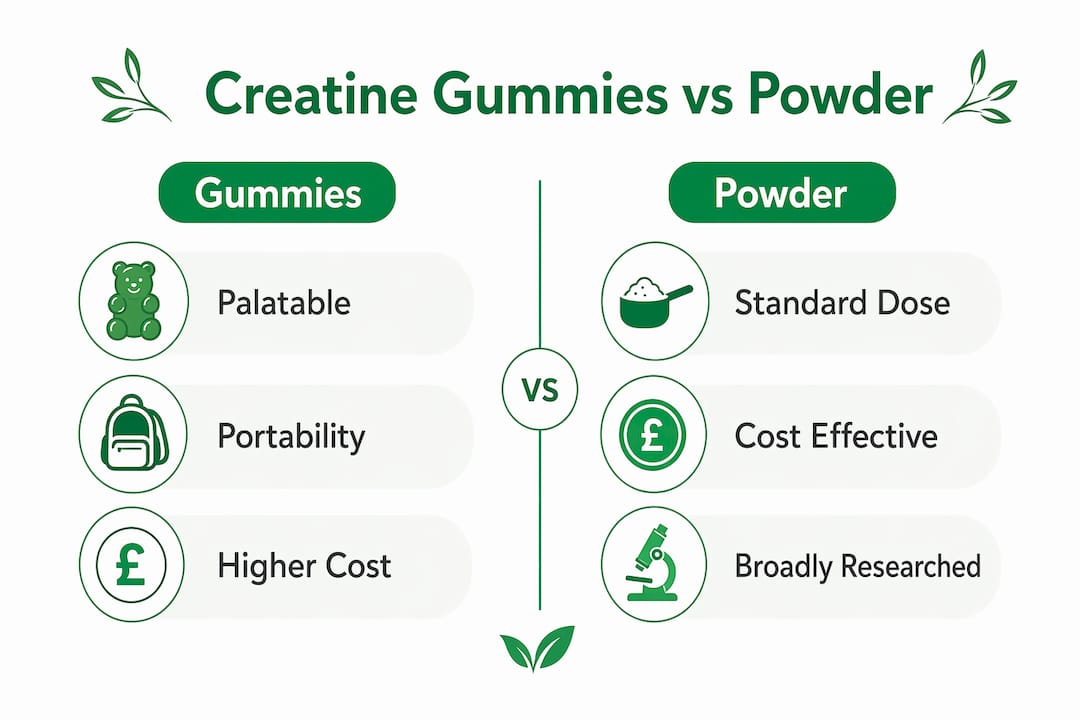
Absorption is a common question with gummies. No direct clinical trials compare gummy and powder absorption rates, but the mechanism suggests similar efficacy when the creatine dose is equivalent. The gummy matrix may slow gastric emptying slightly, and added sugars can stimulate insulin, which may modestly support creatine uptake.
Cost-per-gram is usually higher with gummies than powder, though the portability and palatability trade-off is real for people who dislike mixing drinks.
Pro Tip: Always read the supplement facts panel for the declared creatine amount in milligrams per gummy, not just per serving. “Per serving” can mean two, three, or four gummies depending on the brand.
How common and serious are creatine side effects?
The short answer: less common and less serious than many people assume. A systematic analysis across hundreds of clinical trials found no significant increase in overall adverse-event frequency for creatine versus placebo. Adverse-event rates between creatine and placebo groups were near-identical across that large synthesis of trials.
Statistic: A large synthesis of clinical trials reported near-identical adverse-event rates between creatine and placebo groups, with no significant increase in overall side-effect frequency for creatine.
GI complaints are the most frequently reported issue, and they are dose-dependent rather than an inherent property of creatine itself. Bloating and digestive discomfort tend to appear in the first week and are more common when large single doses are taken.
Evidence is thinner for certain groups. Data on creatine use during pregnancy, in people with pre-existing kidney or liver disease, and in adolescents under 18 is limited. For those populations, a clinician review before starting is the appropriate step. In the UK, the NHS advises caution with supplements that have limited safety data for specific health conditions, and creatine falls into that category for the groups above.

What side effects can creatine gummies cause?
The side effects below apply to creatine supplementation broadly, with gummy-specific notes where the format changes the picture.
- Bloating and GI discomfort. The most reported effect. Creatine draws water osmotically, which can cause a full or bloated feeling. Large single doses amplify this. Splitting your daily amount into two smaller servings across the day reduces the risk considerably.
- Temporary water retention and weight gain. Creatine increases intracellular water in muscle tissue. A small, temporary increase in scale weight is normal and does not reflect fat gain. It typically stabilises after the first week.
- Loose stools or diarrhoea. More likely with doses above 10 g in a single sitting. At maintenance doses of 3–5 g, this is uncommon.
- Muscle cramping. Frequently cited in gym settings, but rigorous data does not support a direct causal link. Staying well-hydrated is good practice regardless.
- Perceived dehydration or heat intolerance. Anecdotally reported but not confirmed in controlled trials. Creatine may actually aid thermoregulation in some exercise contexts.
- Digestive reaction to gummy base or added sugars. Gelatin and pectin are generally well-tolerated, but some people are sensitive to sugar alcohols or artificial sweeteners sometimes used in gummies. Check the full ingredient list if you have a known sensitivity.
- Raised serum creatinine on blood tests. Creatine supplementation can elevate serum creatinine, a standard kidney marker. In healthy adults, this is a benign metabolic by-product of creatine metabolism, not a sign of kidney damage. Inform your GP if you are supplementing before a blood test.
Serious harms are rare in healthy adults. The systematic review evidence consistently shows that creatine at recommended doses does not damage kidneys or liver in people without pre-existing conditions.
Safe dosing: how many creatine gummies do you need?
The standard maintenance dose is 3–5 g per day. A loading phase (typically 20 g/day split across four doses for five to seven days) is optional and not necessary for most people. Skipping loading and starting at maintenance simply takes a few extra weeks to saturate muscle stores.

How many gummies reach an effective dose?
| Creatine per gummy | Gummies needed for an effective dose |
|---|---|
| 1–2 g | Multiple gummies usually needed to reach a clinically effective 3–5 g daily dose |
| 2 g | Fewer gummies needed, but always use the declared amount per product label |
These are generic examples. Always use the declared amount on your specific product label.
How to introduce creatine gummies safely:
- Start at the lower end of the maintenance range (around 3 g/day) for the first week.
- Split your daily gummies across two occasions rather than taking them all at once.
- Take gummies with a carbohydrate-containing meal or snack; the insulin response may support uptake.
- Drink adequate water throughout the day, particularly if you are training.
- Increase to 5 g/day only once you have confirmed you tolerate the lower dose without GI issues.
Label checklist before buying:
- Declared creatine amount per gummy (in mg or g)
- Total serving size (number of gummies)
- Total added sugar per full daily serving
- Presence of caffeine or other active compounds
- Third-party testing seal (Informed Sport, Informed Choice, or equivalent)
Who should check with a clinician before taking creatine gummies?
Most healthy adults can use creatine without medical review, but certain groups need a conversation with their GP or specialist first.
- People with kidney or liver disease. Creatine is metabolised renally; pre-existing conditions affecting these organs warrant caution and monitoring.
- Those on medicines affecting kidney function. NSAIDs, certain antibiotics (aminoglycosides), and some blood pressure medications can interact with renal load. Combining them with creatine without review is not advisable.
- Pregnant or breastfeeding people. Clinical evidence is limited. Until more data exists, the conservative position is to avoid creatine supplementation during these periods.
- Adolescents under 18. Long-term safety data in younger people is insufficient. Most sports nutrition bodies recommend against routine creatine use in this age group.
- People with bipolar disorder or on certain psychiatric medications. Some case reports suggest possible interactions; a psychiatrist’s input is appropriate.
- Those with uncontrolled diabetes or metabolic conditions. Gummies add sugars on top of creatine; the combined glycaemic load needs consideration.
What to bring to your appointment:
- A list of all current medications and supplements
- Recent blood test results (kidney function, liver enzymes) if available
- The product label or a photo of the supplement facts panel
Quality, testing, and regulation for creatine gummies in the UK
Creatine gummies are sold as food supplements in the UK, not as medicines. The Medicines and Healthcare products Regulatory Agency (MHRA) does not pre-approve supplements for safety or efficacy before they reach shelves. That regulatory gap means product quality varies, and the burden of verification falls on the consumer.
Third-party testing reduces the risk of tainted or mislabelled products. Look for these quality indicators:
- Informed Sport or Informed Choice certification. These schemes batch-test products for banned substances and verify label accuracy. Relevant for athletes subject to anti-doping rules and useful for any consumer wanting independent verification.
- Declared creatine content per gummy. A product that lists only a “proprietary blend” without per-unit milligram amounts cannot be verified.
- Transparent ingredient list. Allergens (gelatin is derived from animal collagen; pectin is plant-based), colourings, and sweeteners should all be declared.
- Batch testing and certificate of analysis (CoA) availability. Reputable manufacturers can provide a CoA showing contaminant levels and active ingredient amounts for each production batch.
- Low contaminant levels. Creatine can contain trace impurities (creatinine, dicyandiamide, dihydrotriazine) from manufacturing. A CoA should confirm these are within acceptable limits.
Pro Tip: Contact the manufacturer directly and ask for the CoA for the current batch. A company that cannot or will not provide one is worth avoiding.
What to do if you get side effects from creatine gummies
Most side effects from creatine gummies are mild and manageable without stopping supplementation entirely.
- Reduce the dose. Drop to 2–3 g/day and hold there for a week before attempting to increase again.
- Split your daily amount. Take half in the morning and half in the evening rather than all at once. Splitting doses is an evidence-supported way to reduce GI complaints.
- Check the ingredient list. Sweeteners, sugar alcohols, or artificial colourings in the gummy base may be the cause rather than creatine itself. Switching to a simpler formulation can help.
- Increase fluid intake. Drink at least 2 litres of water per day while supplementing.
- Monitor for 48–72 hours. Mild bloating or loose stools in the first week often resolve without any change. Track symptoms before making adjustments.
Seek urgent medical attention if you experience: severe abdominal pain, persistent vomiting or diarrhoea lasting more than 24 hours, dark or reduced urine output, or yellowing of the skin or eyes (jaundice). These are not typical creatine side effects and require prompt clinical assessment.
If you are in a risk group or have had an abnormal kidney or liver test in the past, ask your GP for serum creatinine, estimated glomerular filtration rate (eGFR), and liver enzyme checks before starting and again after four to six weeks of use. Inform them you are taking creatine, as it can raise serum creatinine independently of kidney function.
Common myths about creatine: what the evidence actually says
Myth: Creatine causes kidney damage. Large clinical trials and systematic reviews consistently show no kidney damage in healthy adults using creatine at recommended doses. Serum creatinine may rise, but this is a normal metabolic consequence of creatine use, not a marker of renal injury. The systematic review evidence across hundreds of trials found no significant increase in adverse kidney-related events versus placebo.
Myth: Creatine causes hair loss. This claim originates from a single small study suggesting a rise in dihydrotestosterone (DHT) with creatine loading. That study has not been replicated at scale, and no large trial has established a causal link between creatine and hair loss.
Myth: Creatine dehydrates you and causes cramps. Anecdotal links between creatine, dehydration, and cramping are not supported by rigorous data. Some research suggests creatine may actually support thermoregulation during exercise rather than impair it.
Myth: All creatine side effects are caused by creatine itself. Some adverse reactions attributed to creatine are more plausibly caused by contaminants or additional ingredients in multi-component products. A pure, third-party tested creatine monohydrate product carries a different risk profile from a proprietary blend with stimulants, sweeteners, and undeclared actives.
Statistic: A large synthesis of clinical trials found near-identical adverse-event rates between creatine and placebo groups, with no significant increase in overall side-effect frequency for creatine supplementation.
Key takeaways
Creatine gummies are safe for most healthy adults at 3–5 g per day, but the gummy format adds a sugar and filler consideration that powder does not.
| Point | Details |
|---|---|
| General safety | Clinical trials show adverse-event rates for creatine are near-identical to placebo in healthy adults. |
| Effective daily dose | Maintenance is 3–5 g/day; many gummies supply only 1–2 g per unit, so check how many you need. |
| Main mitigation step | Split your daily dose across two occasions to reduce GI upset; stay well-hydrated. |
| When to see a clinician | Kidney/liver disease, pregnancy, certain medications, and under-18s all require medical review first. |
| Nu Sante Nutrition | Nu Sante Nutrition’s creatine gummies declare active creatine per serving and are formulated for transparent, quality-first supplementation. |
The gummy format deserves more scrutiny than it usually gets
The safety debate around creatine is largely settled for healthy adults. What gets less attention is the format question. A gummy is not just a delivery vehicle; it is a food product with its own ingredient profile. When you need four or five gummies to reach a clinically validated dose, the sugar and additive load from those extra units becomes a genuine consideration, not a trivial footnote.
The creatine molecule itself has an unusually strong safety record. The concern worth focusing on is whether the product around it is formulated responsibly. A gummy with undeclared creatine content, no third-party testing, and a long list of artificial sweeteners is a different proposition from a clean, batch-tested product with a transparent CoA.
Convenience is a legitimate reason to choose gummies over powder. But convenience should not come at the cost of not knowing what you are actually taking or whether the dose is sufficient. Read the label, ask for the CoA, and treat the gummy base ingredients with the same scrutiny you would apply to the creatine itself.
Nu Sante Nutrition creatine gummies: quality you can check
If you have read this far, you know what to look for: declared creatine per gummy, transparent ingredients, low added sugar, and third-party testing you can verify. That is exactly the standard Nu Sante Nutrition holds its creatine gummies to.

Nu Sante Nutrition formulates each gummy with a clearly declared active creatine amount per unit, so you know precisely how many to take to reach your 3–5 g daily target. The ingredient list is transparent, the sugar content is kept low, and certificates of analysis are available on request. No proprietary blends, no hidden actives.
Visit Nu Sante Nutrition to view full product details, ingredient declarations, and CoA information. If you fall into a risk group covered in this article, please consult a clinician before starting any creatine supplement.
This article is general information, not medical advice. Confirm current guidance with a qualified healthcare professional for your own situation.
Useful sources and further reading
The following sources were used in preparing this article and are recommended for further reading.
- Safety of creatine supplementation: analysis of the prevalence of reported side effects in clinical trials and adverse event reports — large systematic analysis of adverse-event rates across clinical trials.
- What is creatine? Potential benefits and risks — Harvard Health overview of dosing, benefits, and regulatory context.
- Creatine — Cleveland Clinic — clinical summary including contraindications and risk groups.
- A short review of the most common safety concerns regarding creatine ingestion — Frontiers in Nutrition review covering GI dose-dependency and mitigation.
- Are creatine gummies effective? — clinician-authored review of gummy-specific dosing and absorption considerations.
- Creatine — National Library of Medicine — reference entry covering pharmacology and safety data.
- For third-party testing certification, see Informed Sport and Informed Choice for UK-relevant batch-testing schemes. Manufacturers should be able to provide a certificate of analysis on request for any batch currently on sale.