
Magnesium glycinate vs citrate: which form suits you?
Magnesium glycinate is the better choice for sleep, anxiety, and daily calm. Magnesium citrate works best for constipation relief and digestive support. Both forms are well absorbed, but they suit different health goals entirely.
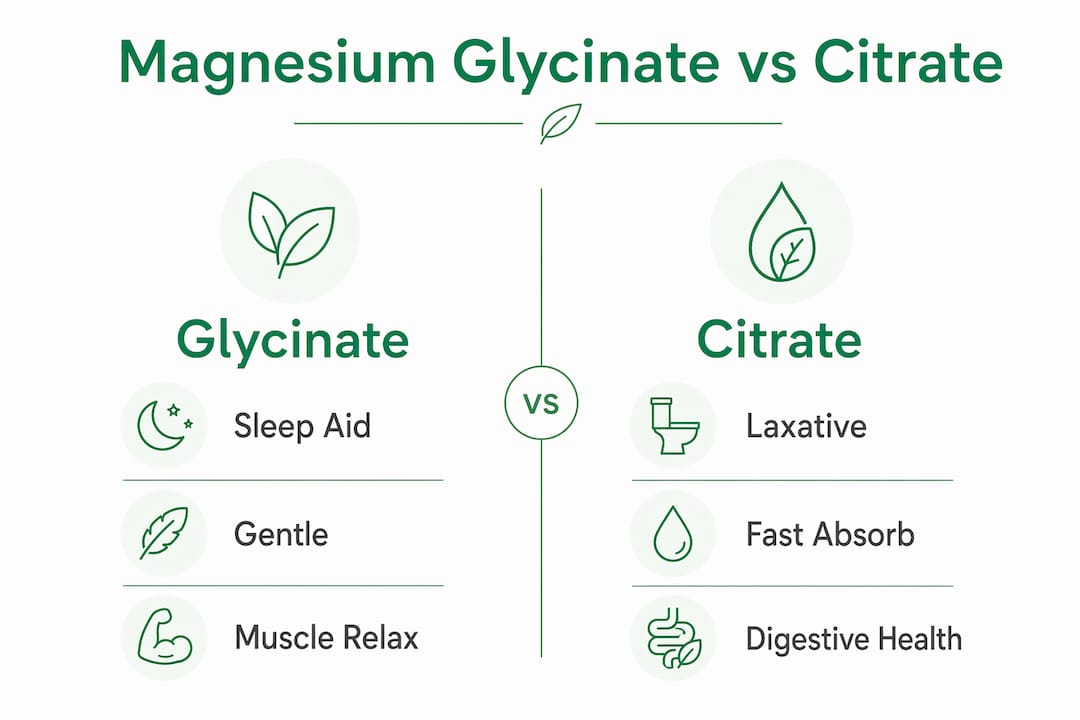
- Magnesium glycinate: bound to the amino acid glycine, which has its own calming effect on the nervous system. Gentler on the gut. Preferred for sleep, anxiety, and muscle relaxation.
- Magnesium citrate: combined with citric acid. Acts as an osmotic laxative, drawing water into the intestines. Works within 30 minutes to 6 hours for constipation relief.
- Absorption: both forms absorb in around 25–30%, though citrate may act faster while glycinate offers more stable uptake over time.
- Side effects: citrate frequently causes diarrhoea and abdominal discomfort at higher doses. Glycinate is considerably gentler.
- The deciding factor: your health goal, not absorption rate alone.
What are magnesium glycinate and magnesium citrate?
Both are supplemental forms of magnesium, meaning neither occurs naturally in food in this exact chemical structure. They are created by binding elemental magnesium to a carrier compound, and that carrier is what changes how each form behaves in the body.
Magnesium glycinate pairs magnesium with glycine, a non-essential amino acid. Glycine acts as an inhibitory neurotransmitter in the central nervous system, which is why this form carries a calming quality beyond what magnesium alone provides. The chelation process also protects the magnesium molecule during digestion, supporting stable absorption in the small intestine.
Magnesium citrate combines magnesium with citric acid, a compound found naturally in citrus fruits and central to the body’s energy metabolism cycle. The citrate salt is water-soluble and dissolves readily in the gut, which partly explains its faster action. Available as capsules, powders, and liquids, it is one of the most widely used forms in both clinical and retail settings.
- Magnesium glycinate: chelated form, amino acid carrier, supports nervous system calm
- Magnesium citrate: salt form, organic acid carrier, supports digestion and energy metabolism
- Both: supplemental rather than dietary sources of magnesium, with enhanced absorption compared to inorganic forms such as magnesium oxide
Key differences between magnesium glycinate and citrate
The differences between these two forms go beyond chemistry. They play out in how your body responds, how your gut tolerates them, and how quickly you notice an effect.
Absorption and onset
Citrate absorbs slightly faster, partly because it dissolves quickly in the gut. However, its osmotic laxative effect can shorten the time magnesium spends in the intestine, which may reduce how much is actually taken up. Glycinate moves through the gut more slowly, allowing for steadier absorption over a longer window. High bioavailability does not automatically mean better clinical results, and citrate’s rapid transit can work against it when the goal is consistent magnesium status rather than a one-off laxative effect.

Digestive impact
This is where the two forms diverge most clearly in everyday use. Citrate’s water-drawing mechanism softens stool and stimulates bowel movement, which is exactly what you want for constipation but a problem if you are taking magnesium for sleep or muscle recovery. Gastrointestinal side effects occur more frequently with citrate. Glycinate produces far fewer digestive complaints, making it the practical choice for daily, long-term supplementation.
Side effects compared
| Feature | Magnesium glycinate | Magnesium citrate |
|---|---|---|
| Primary use | Sleep, anxiety, muscle relaxation | Constipation, digestive support |
| Absorption rate | similar for both | similar for both, with citrate faster onset |
| Gut transit | Slower, more stable | Faster, osmotic effect |
| Digestive side effects | Low | Higher (diarrhoea, cramping) |
| Onset of action | Gradual | 30 minutes to 6 hours |
| Daily tolerability | High | Moderate |
| Cost | Higher | Lower |
Pro Tip: If you have tried magnesium before and stopped because of loose stools or cramping, the form was likely the issue rather than magnesium itself. Switching to glycinate resolves this for most people.
How to choose between glycinate and citrate for your health goals
The right form depends entirely on what you are trying to address. Absorption rates are similar enough that the decision should come down to your target symptom, your gut sensitivity, and how consistently you plan to take it.
Sleep and anxiety
Glycinate is the clinical preference here. Glycine independently supports sleep quality by lowering core body temperature through vasodilation, and clinical trials show that 3g of glycine taken before bed improves sleep onset and efficiency. Paired with magnesium’s role in regulating the nervous system, the combination in glycinate offers a synergistic effect that citrate simply cannot replicate. Clinicians recommend glycinate for sleep and stress because it maintains stable blood magnesium levels without the digestive disruption that citrate can cause.
Constipation and digestive health
Citrate is the clear choice. It softens stool by drawing water into the intestines and is used medically in higher doses for bowel preparation. For everyday constipation relief, standard supplement doses work well. The laxative effect that makes citrate less suitable for daily calm supplementation is precisely what makes it effective here.
Muscle recovery and general magnesium status
Either form works, but glycinate’s better daily tolerability gives it an edge for consistent use. Magnesium supports muscle contraction, nerve function, and protein synthesis, so regular intake matters more than which form you choose. That said, if digestive comfort affects whether you actually take it each day, glycinate wins by default.
Cost considerations
Citrate is generally less expensive than glycinate at retail. If budget is a primary concern and constipation is your main issue, citrate delivers good value. For sleep and anxiety goals, the higher cost of glycinate is usually justified by its tolerability and the added benefit of glycine.
- Choose glycinate for: sleep, anxiety, daily calm, sensitive digestion, long-term supplementation
- Choose citrate for: constipation, occasional digestive support, lower budget
- Consider both: some people cycle between forms depending on their current needs
Safety, contraindications, and who should take care
Magnesium supplements are well tolerated by most healthy adults, but specific conditions and medications change the picture considerably.
Kidney disease
The kidneys regulate magnesium excretion. People with reduced kidney function cannot clear excess magnesium efficiently, which raises the risk of toxicity. Magnesium citrate carries additional concern because its laxative effect can cause dehydration and electrolyte imbalance, compounding the strain on already compromised kidneys. Medical supervision is required before either form is used in this group, but citrate poses the greater risk.
Gastrointestinal conditions
Conditions such as inflammatory bowel disease, irritable bowel syndrome, or Crohn’s disease can be aggravated by citrate’s osmotic action. Glycinate is the safer option in these cases, though a GP or gastroenterologist should still be consulted.
Drug interactions
Magnesium can affect the absorption of certain antibiotics (particularly tetracyclines and fluoroquinolones), bisphosphonates, and some thyroid medications. The MHRA has also flagged that proton pump inhibitors can cause hypomagnesaemia with long-term use, which means people on these drugs may need supplementation but should discuss it with their prescriber first.
Upper intake levels and toxicity
The tolerable upper intake level for supplemental magnesium is 350mg per day for adults. This applies to magnesium from supplements only, not food. Exceeding this level regularly can cause fatigue, diarrhoea, and in severe cases, heart rhythm disturbances. Toxicity from food sources alone is not a practical concern for healthy adults.
Pregnancy and breastfeeding
Magnesium requirements increase during pregnancy. Both forms are generally considered safe at standard doses, but higher doses or therapeutic use should always involve a midwife or obstetrician. Citrate’s laxative effect is an additional reason to prefer glycinate during pregnancy.
- Avoid citrate without medical advice if: you have kidney disease, inflammatory bowel conditions, or are prone to dehydration
- Avoid excess supplementation if: you take antibiotics, bisphosphonates, or proton pump inhibitors
- Upper limit: 350mg supplemental magnesium per day for adults
- Pregnancy: standard doses generally safe; higher doses require professional guidance
Nu Sante Nutrition magnesium gummies: a practical daily option

Not everyone wants to swallow capsules or measure out powders. Nu Sante Nutrition’s magnesium gummies offer a straightforward alternative: a fixed daily dose in a format that fits easily into a morning or evening routine.
The gummies are designed for people who want consistent supplementation without the digestive disruption that some traditional forms cause. For those who have found capsules or powders hard to stick with, a gummy format removes the friction. Nu Sante Nutrition’s formulation prioritises quality ingredients and a clean, health-forward approach, which aligns with the brand’s wider range of wellness gummies covering everything from ashwagandha and creatine to collagen and turmeric.
Pro Tip: Taking your magnesium gummy at the same time each evening, ideally 30–60 minutes before bed, builds a consistent habit and aligns with magnesium’s natural role in supporting relaxation and sleep.
- Format: gummies, no capsules or powders needed
- Convenience: fixed dose, easy to take daily
- Suitable for: people sensitive to digestive side effects from other supplement forms
- Range: part of Nu Sante Nutrition’s broader wellness gummy collection
When comparing supplement form absorption across delivery types, gummies offer a practical middle ground between the speed of liquids and the precision of capsules, particularly for minerals like magnesium where daily consistency matters more than peak-dose delivery.
Dosage recommendations for magnesium glycinate and citrate
Getting the dose right matters as much as choosing the right form. Both forms use elemental magnesium as the reference point, not the total weight of the compound.
For sleep and anxiety, glycinate is often taken at doses that support nervous system function and sleep quality but should not exceed the supplemental upper limit of magnesium set for adults. Some people start at the lower end and adjust based on how they feel.
Citrate doses for general magnesium support vary, with higher clinical doses used for constipation under medical guidance rather than in standard supplementation. Standard retail supplement doses of citrate sit well within the safe range for most healthy adults.
A few practical points on dosing:
- Take with food to reduce the chance of nausea, particularly with citrate
- Split doses across the day if you are taking higher amounts, as smaller doses absorb more efficiently than a single large one
- Stay hydrated when using citrate, since its osmotic action draws water into the gut and can contribute to dehydration if fluid intake is low
- Do not exceed 350mg supplemental magnesium per day without medical supervision, regardless of form
- Dietary magnesium from food (nuts, seeds, leafy greens, wholegrains) does not count towards the supplemental upper limit
The UK dietary reference values set the reference nutrient intake for magnesium at 300mg per day for adult men and 270mg per day for adult women from all sources combined. Supplements fill the gap when diet alone falls short, which the National Diet and Nutrition Survey suggests is common in the UK population.
Key takeaways
Magnesium glycinate suits sleep, anxiety, and daily supplementation; magnesium citrate suits constipation relief, with both forms absorbing in around 25–30% and the upper safe limit for supplemental magnesium set at 350mg per day for adults.
| Point | Details |
|---|---|
| Best form for sleep and anxiety | Magnesium glycinate, due to glycine’s calming effect and low digestive side effects. |
| Best form for constipation | Magnesium citrate, which acts as an osmotic laxative within 30 minutes to 6 hours. |
| Absorption rate | Both forms absorb well; glycinate offers more stable uptake over time. |
| Safe upper limit | 350mg supplemental magnesium per day for adults; higher doses need medical supervision. |
| Daily tolerability | Glycinate is better tolerated long-term; citrate’s laxative effect reduces adherence for some. |