

Best supplements for sleep: an evidence-based UK guide
What are the best supplements for improving sleep quality?
The most effective natural sleep supplements are melatonin, magnesium, valerian, chamomile, hops, and CBD. Each works through a different mechanism, and the right choice depends on whether you struggle to fall asleep, stay asleep, or simply feel wired at bedtime.
- Melatonin: A hormone your body produces naturally. Supplements work best for circadian rhythm disruptions such as jet lag or shift work, rather than chronic insomnia. Low-dose melatonin of 1.5–3 mg taken a few hours before bed is the standard recommendation.
- Magnesium (glycinate form): Supports nervous system regulation and muscle relaxation. Magnesium glycinate is preferred for sleep because the glycine component has its own calming properties and the form is gentler on the digestive system.
- Valerian: An herbal root with evidence from multiple randomised controlled trials showing reduced sleep latency and improved sleep quality, particularly when combined with hops.
- Chamomile: Widely used as a mild sedative. The active compound apigenin binds to GABA receptors in the brain, promoting relaxation. Clinical evidence is limited but consistent with its traditional use.
- Hops: Often paired with valerian. Valerian and hops show improved sleep quality and reduced sleep latency in combination, working through GABA and serotonin receptor modulation.
- CBD (cannabidiol): Growing in popularity in the UK. Early research suggests it may reduce anxiety that disrupts sleep, though large-scale trials are still limited.
- L-theanine: An amino acid found in green tea. Evidence shows it reduces night-time awakenings and stress-related sleep disruption without causing daytime drowsiness.
A detailed look at each sleep supplement
Melatonin
Melatonin is not a sedative. It is a hormone that signals to your body that it is time to sleep, making it a sleep regulator rather than a sleep inducer. That distinction matters practically: melatonin works best for circadian rhythm disturbances such as jet lag, delayed sleep phase syndrome, or adjusting to shift work schedules. For people with straightforward insomnia, the evidence is weaker.
Dosing is an area where many people go wrong. Higher doses do not produce better results and can leave you groggy. The NHS recommends 1.5–3 mg taken a few hours before your intended bedtime. Timing matters more than dose: taking melatonin too close to bed or at the wrong point in your circadian cycle reduces its effectiveness considerably.
A review of seven randomised controlled trials found that five demonstrated statistically significant improvements in sleep quality compared to placebo, though doses and intervention lengths varied widely across studies. The heterogeneity in trial design means optimal dosing strategies are still being refined.
Magnesium
Magnesium is often the first supplement worth trying for general sleep difficulties, because it addresses underlying nervous tension rather than simply sedating you. It supports the regulation of GABA, the brain’s primary calming neurotransmitter, and helps control cortisol levels that can keep you alert at night.
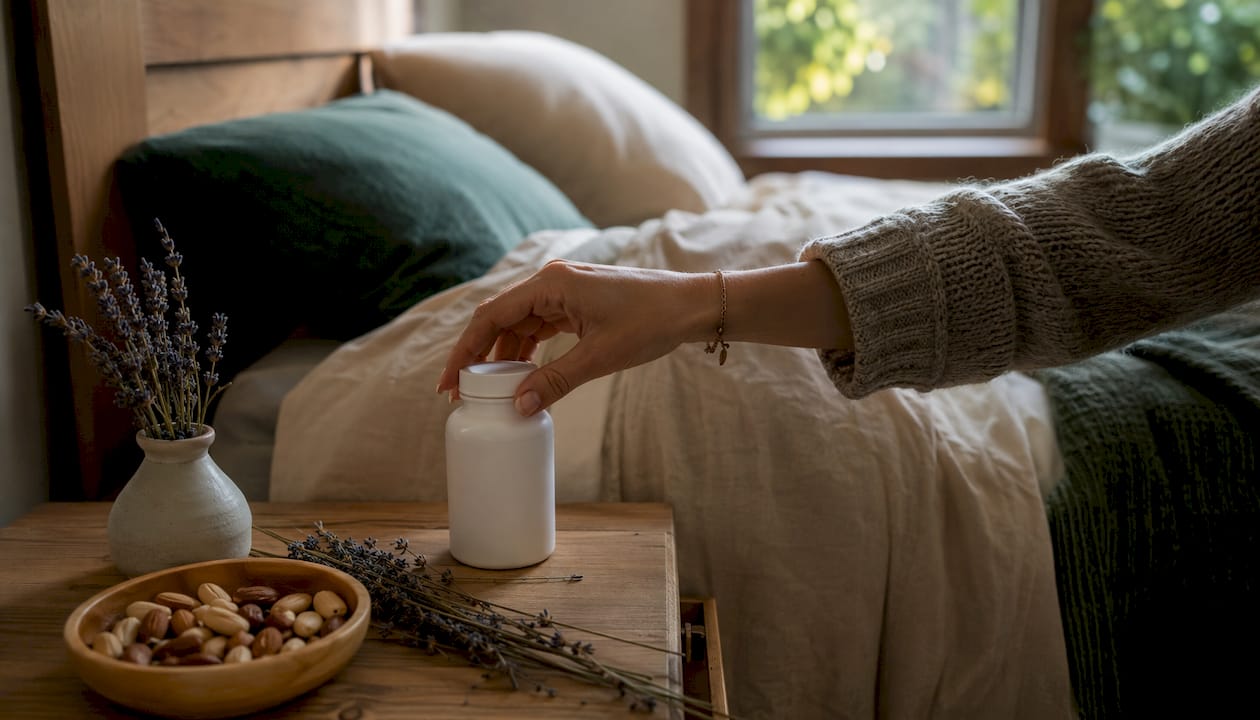
The form of magnesium you take changes the outcome significantly. Magnesium glycinate is the preferred form for sleep because it combines magnesium with glycine, an amino acid with its own relaxing properties, and causes fewer gastrointestinal side effects than magnesium oxide or citrate. Magnesium citrate is a reasonable alternative but has a stronger laxative effect at higher doses.
Clinical trial results on magnesium and sleep are mixed. One trial of 100 healthy adults taking 320 mg of magnesium citrate daily for seven weeks found no significant difference between the supplement and placebo groups overall. However, when researchers looked only at participants who had low baseline magnesium levels, supplementation did produce a meaningful increase in serum magnesium. This suggests magnesium is most likely to help people who are actually deficient, which is more common in the UK than many people realise.
Valerian, chamomile, and hops
These three herbs are among the most studied natural sleep aids, and they share a common mechanism: modulation of GABA receptors in the brain, the same pathway targeted by prescription sleep medications, though with much milder effects.

Valerian contains valerenic acid and isovaleric acid, which interact with GABA and serotonin receptors. Several randomised controlled trials and meta-analyses have found improvements in sleep quality and reduced time to fall asleep. It is generally well-tolerated, though it can interact with sedative medications and should not be combined with alcohol.
Hops are rarely used alone. The evidence consistently shows that hops combined with valerian outperform either ingredient in isolation, with improvements in both sleep latency and overall sleep quality. The active compounds, alpha-acids and beta-acids, also appear to interact with melatonin receptors, giving hops a dual mechanism.
Chamomile works primarily through apigenin, a flavonoid that binds to benzodiazepine receptors in the brain. The clinical evidence is less extensive than for valerian, but chamomile is widely considered safe for regular use and is available across the UK in tea, capsule, and gummy formats.
Key insight: Herbal supplements vary considerably in strength of evidence. Valerian and hops have the strongest clinical backing among herbal options, while chamomile’s evidence base is more limited but consistent with its traditional use as a mild relaxant.
Benefits and cautions at a glance:
- Valerian: reduces sleep latency; may interact with sedatives and alcohol
- Hops: most effective in combination with valerian; few reported adverse effects
- Chamomile: mild sedative effect; generally safe; limited large-scale trial data
CBD and emerging sleep aids
CBD has become one of the most talked-about natural sleep aids in the UK since its legalisation as a food supplement. It does not act directly on sleep architecture in the way melatonin does. Instead, it appears to reduce anxiety and stress, which are among the most common causes of poor sleep. The research is promising but still early, and most trials to date have been small or short-term.
L-theanine has a more established evidence base for sleep than CBD. In a randomised controlled trial by Hidese et al., participants taking 200 mg of L-theanine daily showed significant improvements in sleep quality as measured by the Pittsburgh Sleep Quality Index, alongside reductions in stress-related symptoms. Crucially, L-theanine did not cause daytime drowsiness, making it practical for people who need to function well the following day.
Tryptophan is an amino acid precursor to both serotonin and melatonin. The logic is straightforward: more tryptophan means more raw material for your body to produce its own melatonin. Evidence from clinical studies is modest but positive, particularly for people whose sleep difficulties are linked to low mood or anxiety.
Vitamin D is worth mentioning separately. Vitamin D supplementation improved sleep quality and reduced disturbances in people with deficiency, with researchers attributing the effect to vitamin D’s role in regulating melatonin production. Given how common vitamin D deficiency is in the UK, particularly through autumn and winter, this is a supplement many people would benefit from regardless of sleep concerns.
How supplements compare: evidence and practical use
| Supplement | Primary mechanism | Strength of evidence | Best suited for |
|---|---|---|---|
| Melatonin | Circadian rhythm regulation | Moderate to strong | Jet lag, shift work, delayed sleep phase |
| Magnesium glycinate | GABA regulation, cortisol control | Moderate (strongest in deficiency) | Nervous tension, general sleep quality |
| Valerian | GABA and serotonin receptor modulation | Moderate | Sleep latency, mild insomnia |
| Hops (with valerian) | GABA, serotonin, melatonin receptors | Moderate | Sleep latency and quality combined |
| Chamomile | Apigenin on GABA receptors | Limited but consistent | Mild relaxation, general use |
| CBD | Anxiety reduction | Early/emerging | Anxiety-driven sleep disruption |
| L-theanine | Stress reduction, GABA support | Moderate | Stress-related poor sleep, night awakenings |
| Vitamin D | Melatonin regulation | Moderate (in deficiency) | Deficiency-related sleep disturbance |
How do you choose and use sleep supplements safely?
Choosing a sleep supplement is not simply a matter of picking the most popular option. The right choice depends on the nature of your sleep problem, your existing medications, and the quality of the product itself.
Matching the supplement to your sleep problem
Not all sleep difficulties are the same. If you struggle to fall asleep, melatonin or valerian are the most evidence-backed starting points. If you wake frequently during the night, magnesium glycinate or L-theanine may be more relevant. If anxiety is the root cause, L-theanine or CBD are worth considering before reaching for stronger options.
Timing and dosing
Timing is particularly important for melatonin. Taking it 1–2 hours before your target bedtime allows it to begin shifting your circadian rhythm before you actually try to sleep. For magnesium, evening dosing is standard, typically 30–60 minutes before bed. Valerian takes longer to build up in the system and may need consistent use for one to two weeks before effects become noticeable.
Interactions with medications
Sleep supplements can interact with prescription drugs in ways that are not always obvious.
- Valerian and hops can amplify the effects of sedative medications, including benzodiazepines and antihistamines.
- Melatonin may interact with blood thinners such as warfarin, immunosuppressants, and some diabetes medications.
- CBD can inhibit liver enzymes that metabolise a wide range of drugs, potentially altering their concentration in the blood.
If you take any regular prescription medication, speak to a pharmacist or GP before starting a sleep supplement. This is not a precaution to take lightly: the interactions above are clinically documented, not theoretical.
Quality and regulation
The UK supplement market is not as tightly regulated as pharmaceutical drugs. Natural labels do not guarantee safety, and many products marketed as natural contain synthetic compounds or inconsistent dosages. Choosing a brand that publishes third-party testing results and uses standardised ingredient forms (such as magnesium glycinate rather than a generic “magnesium blend”) reduces the risk of getting a product that does not match its label.
Melatonin is a prescription-only medicine in the UK, unlike in the United States where it is sold freely over the counter. If you want to try melatonin, you will need to consult a GP or use a regulated online prescribing service.
Long-term safety and dependency
Most herbal sleep supplements carry a low risk of physical dependency. Valerian, chamomile, and hops do not produce the tolerance or withdrawal effects associated with prescription sleep medications. Melatonin is similarly considered safe for short-term use, though persistent sleep issues require specialist consultation rather than indefinite supplementation.
CBD is generally well-tolerated, but long-term data in humans is still limited. High doses have been associated with liver enzyme changes in some studies, which is worth knowing if you plan to use it regularly.
Practical recommendations:
- Start with the lowest effective dose and increase only if needed after two weeks.
- Use supplements as a short-term tool alongside good sleep hygiene, not as a permanent fix.
- Avoid combining multiple sedating supplements without professional guidance.
- Choose products with clear ingredient labelling and third-party quality verification.
- Consult a GP if sleep problems persist beyond four weeks despite supplementation.
Pro Tip: No supplement replaces consistent sleep hygiene. A fixed wake time, a cool dark bedroom, and limiting screen exposure in the hour before bed will amplify the effect of any supplement you take. Supplements work best as a support layer, not a standalone solution.
Common questions about sleep supplements
What is the best supplement for sleep? There is no single best option for everyone. Melatonin is most effective for circadian rhythm issues such as jet lag. Magnesium glycinate is a strong first choice for general sleep quality, particularly if you experience muscle tension or stress. Valerian combined with hops has the strongest herbal evidence base for reducing the time it takes to fall asleep.
Which supplements help with staying asleep rather than falling asleep? Magnesium glycinate and L-theanine are the most relevant here. L-theanine specifically reduces night-time awakenings without causing morning grogginess, based on clinical trial data. Magnesium supports deeper, more restorative sleep by regulating GABA activity throughout the night.
What do healthcare providers in the UK recommend for sleep? In the UK, melatonin is prescription-only and is typically prescribed for short-term use in adults with circadian rhythm disorders or delayed sleep phase syndrome. GPs often recommend sleep hygiene interventions as a first step, with cognitive behavioural therapy for insomnia (CBT-I) considered the gold-standard non-pharmacological treatment. Herbal supplements are not routinely prescribed but are acknowledged as reasonable adjuncts for mild sleep difficulties.
Can vitamin deficiencies cause sleep problems? Yes. Vitamin D deficiency is linked to disrupted sleep, partly because vitamin D plays a role in regulating melatonin production. Magnesium deficiency is also associated with poor sleep quality and restless legs. Both are common in the UK population, particularly during winter months when sunlight exposure is low.
Are sleep supplements safe to take long-term? Most herbal options, including valerian, chamomile, and L-theanine, are considered safe for extended use at recommended doses. Melatonin is generally recommended for short-term use only. CBD lacks long-term human safety data. Any supplement used for more than four weeks without improvement warrants a conversation with a healthcare professional.
Do sleep gummies work as well as capsules? The delivery format matters less than the ingredient quality and dose. Sleep gummies with magnesium or herbal extracts at clinically relevant doses are as effective as capsules, provided the formulation is consistent. The advantage of gummies is adherence: people are more likely to take them regularly, which matters for supplements like valerian that require consistent use to build effect.
Nusante’s approach to sleep supplements
Nusante builds its supplements around one principle: quality ingredients in a format people will actually use consistently. The brand’s Magnesium Gummies use a carefully selected form of magnesium designed for absorption and tolerability, reflecting the evidence that form matters as much as dose when it comes to sleep support.
Nusante’s position: Convenience should not come at the cost of quality. Every Nusante gummy is formulated with ingredient standards that match what the clinical evidence supports, not just what is cheapest to manufacture.
Gummy supplements address a real adherence problem. Capsules and powders are easy to skip. A gummy that tastes good and fits into an evening routine removes the friction that causes people to stop taking supplements before they see results. For supplements like valerian and magnesium, where consistent daily use over one to two weeks is needed to see the full effect, that consistency is not a minor detail.
Nusante’s sleep-relevant range includes:
- Magnesium Gummies: formulated for nervous system support and relaxation
- Ashwagandha Gummies: an adaptogen with evidence for reducing cortisol and supporting stress-related sleep disruption
- Multivitamin Gummies: includes vitamin D, addressing the deficiency-related sleep disruption common in the UK
The brand’s ethos aligns with what the evidence actually supports: targeted ingredients, consistent dosing, and a format that fits a busy lifestyle without compromise.
Explore Nusante’s gummy supplements and find the right sleep support for your routine.
Key takeaways
Magnesium glycinate and melatonin are the most evidence-backed supplements for sleep, but the right choice depends on your specific sleep difficulty, medication history, and whether a deficiency is involved.
| Point | Details |
|---|---|
| Melatonin is a regulator, not a sedative | It works best for circadian rhythm issues like jet lag, not general insomnia. |
| Magnesium form matters | Glycinate is preferred for sleep due to better tolerability and a calming glycine component. |
| Valerian and hops work best together | Clinical evidence shows the combination outperforms either herb used alone. |
| Quality and regulation vary widely | Choose brands with standardised ingredients and third-party testing; natural labels do not guarantee safety. |
| Supplements support, not replace, sleep hygiene | Consistent sleep habits amplify any supplement’s effect; persistent problems need professional review. |