
UK Safety Check: Mushroom Gummy Side Effects in First Two Weeks
Most people who take legal functional mushroom gummies (reishi, lion’s mane, cordyceps) experience no side effects at all, and when reactions do occur they’re usually mild, including bloating, headache, or dry mouth. Severe outcomes, such as liver injury or serious allergic reactions, are rare and documented mostly in isolated case reports. If you notice jaundice, severe abdominal pain, unexplained bleeding, or swelling of the face or throat, stop taking the product and get medical attention immediately.
TL;DR:
- Most side effects from mushroom gummies are mild digestive issues such as bloating and gas, which usually appear early and resolve quickly.
- Rare but serious adverse effects include liver injury, with cases often linked to poor manufacturing and contaminated products.
- Certain groups, including those on blood thinners, with liver disease, pregnant women, and children, should consult a healthcare professional before use.
- Quality assurance relies heavily on transparent labeling, batch testing for contaminants, and choosing products with clear species and extract information.
- Starting with low doses, taking with food, and monitoring symptoms can significantly reduce the risk of side effects or adverse reactions.
Table of Contents
- Mushroom gummies side effects by type: what the evidence shows
- Who should be cautious and which medicines interact with mushroom gummies
- How to judge mushroom gummy quality and avoid contamination or mislabelling
- Practical dosing to reduce mushroom gummy side effects
- Long term side effects and what the safety data actually covers
- Symptoms and management of overdose or adverse reactions
- When to consult a healthcare professional about mushroom gummies
- Nu Sante Nutrition’s approach: formulation and transparency as risk management
- Where to find transparent, moderate-strength mushroom gummies
- Sources
- FAQ
Mushroom gummies side effects by type: what the evidence shows
Digestive upset tops the list for nearly every functional mushroom species. Reishi users report bloating, gas, and loose stools most often, alongside occasional headache and dry mouth or throat, according to WebMD’s ingredient monograph. These reactions tend to appear early, often within the first few doses, and settle once the body adjusts or the dose drops.
Lion’s mane carries a similar profile. Clinical reviews describe mostly mild stomach discomfort, headache, and occasional allergic skin reactions, with serious events documented only rarely, per a 2025 safety review in Frontiers in Nutrition. Cordyceps sits in the same broad category: generally well tolerated, with digestive complaints being the most common complaint reported.
The rare end of the spectrum matters more, even though it’s uncommon. A small number of case reports link reishi to clinically apparent liver injury, though the exact cause is often uncertain and the pattern varies: some patients recovered within weeks of stopping, others took months, according to a liver injury review published on NCBI Bookshelf.
A useful data point: toxicology work testing reishi and cordyceps powders in animal studies found no adverse effects even at doses well above typical human supplement ranges, according to a 2024 toxicological assessment in Frontiers in Toxicology. That gap between reassuring animal data and rare human case reports is exactly why quality control matters so much, a point covered further below.
Common patterns worth flagging:
- Bloating, gas, or loose stools, usually within the first week
- Mild headache, often tied to starting at too high a dose
- Dry mouth or throat irritation, more common with reishi
- Skin reactions or itching, occasionally reported with lion’s mane
- Rare, serious liver-related symptoms requiring immediate medical review
Most supplement doses typically vary in the moderate range daily, but gummies can differ widely in potency, and blended formulas can make it hard to know exactly how much of each species you’re getting.
Who should be cautious and which medicines interact with mushroom gummies
Certain groups face a higher chance of complications and should speak to a clinician or pharmacist before starting any mushroom gummy, even one they’ve seen recommended widely.
- People taking anticoagulants or blood thinners
- Anyone on blood pressure medication
- People managing diabetes with insulin or oral medication
- Pregnant or breastfeeding people
- Children, particularly those with existing neurological conditions
- People with liver disease or autoimmune/immunological disorders
Reishi’s pharmacology includes effects on clotting and blood pressure, which explains why it can interact with anticoagulants and antihypertensive drugs, according to WebMD. There’s also a plausible effect on blood glucose, worth flagging if you’re on diabetes medication and monitoring closely.
Children deserve particular caution. A 2026 paediatric case report described a nine-year-old with an underlying neurological condition who developed seizures and hallucinations after taking multiple medicinal fungi supplements together; symptoms resolved once the products were stopped, according to BMC Complementary Medicine. That’s a stark reminder that combining several mushroom products, or giving them to children without medical input, raises the stakes considerably.
Pro Tip: Bring the actual product packaging, not just the ingredient name, to your pharmacist. Potency and species can vary enough between brands that “reishi” on one label doesn’t mean the same dose as “reishi” on another.
Practical steps before you start: show your GP or pharmacist the product label, consider pausing any mushroom supplement in the weeks around surgery, and keep a written note of what you’re currently taking.
How to judge mushroom gummy quality and avoid contamination or mislabelling
The mushrooms themselves rarely cause the worst outcomes. Poor manufacturing does. Dietary supplements aren’t pre-approved before they reach shelves, and quality varies enormously between brands, which is exactly why independent lab testing matters so much, according to the FDA’s guidance on dietary supplements.
Before buying, run through this checklist:
- Check whether the label names the species and specifies fruiting body or mycelium, since these differ in active compound content.
- Look for the extract ratio and the exact dose per gummy, not just a vague “proprietary blend.”
- Find a batch-specific certificate of analysis (COA), ideally linked or accessible via a QR code on the packaging.
- Confirm the COA tests for heavy metals, microbial contamination, and the absence of THC or psilocybin.
- Check for clear allergen labelling and child-resistant packaging.
UK regulatory guidance from the Office for Product Safety and Standards warns specifically that some mushroom products on the market have been found contaminated or marketed with misleading claims about psychoactive effects, neither of which has any place in a legal functional supplement.
Red flags worth walking away from:
- Marketing language that hints at psychoactive or mind-altering effects
- No batch number or COA link anywhere on the packaging or website
- Vague “proprietary blend” labelling with no per-species dose
- Missing allergen information
A brand that publishes COAs by batch, testing for contaminants and confirming the absence of psilocybin or THC, removes most of the guesswork a buyer would otherwise face.
Practical dosing to reduce mushroom gummy side effects
Getting the dose and timing right cuts your risk of side effects more than almost anything else you control as a daily user.
- Start low. Try half a gummy, or take a full one every other day, for the first several days rather than jumping straight to the labelled serving.
- Move up gradually. If you notice no digestive upset or headache after a few days, step up to the full recommended serving.
- Take with food and water. This reduces gut irritation, particularly with reishi. Avoid taking your gummy right before bed if you notice it makes you more alert.
- Keep a short symptom log for the first two to four weeks. Track bowel habits, headaches, skin changes, and any signs of unusual bruising or bleeding.
- Know when to stop. Facial swelling, hives, jaundice or dark urine, severe abdominal pain, unexplained bruising, or fainting all warrant stopping the gummy and seeking medical care promptly.
Pro Tip: If you already take your morning coffee alongside supplements, space them out by twenty to thirty minutes. Caffeine and mushroom gummies together can compound feelings of jitteriness in sensitive people. This guide to timing supplements with coffee covers the detail.
Give any new gummy at least two weeks before judging whether it suits you, unless something concerning shows up sooner.
Long term side effects and what the safety data actually covers
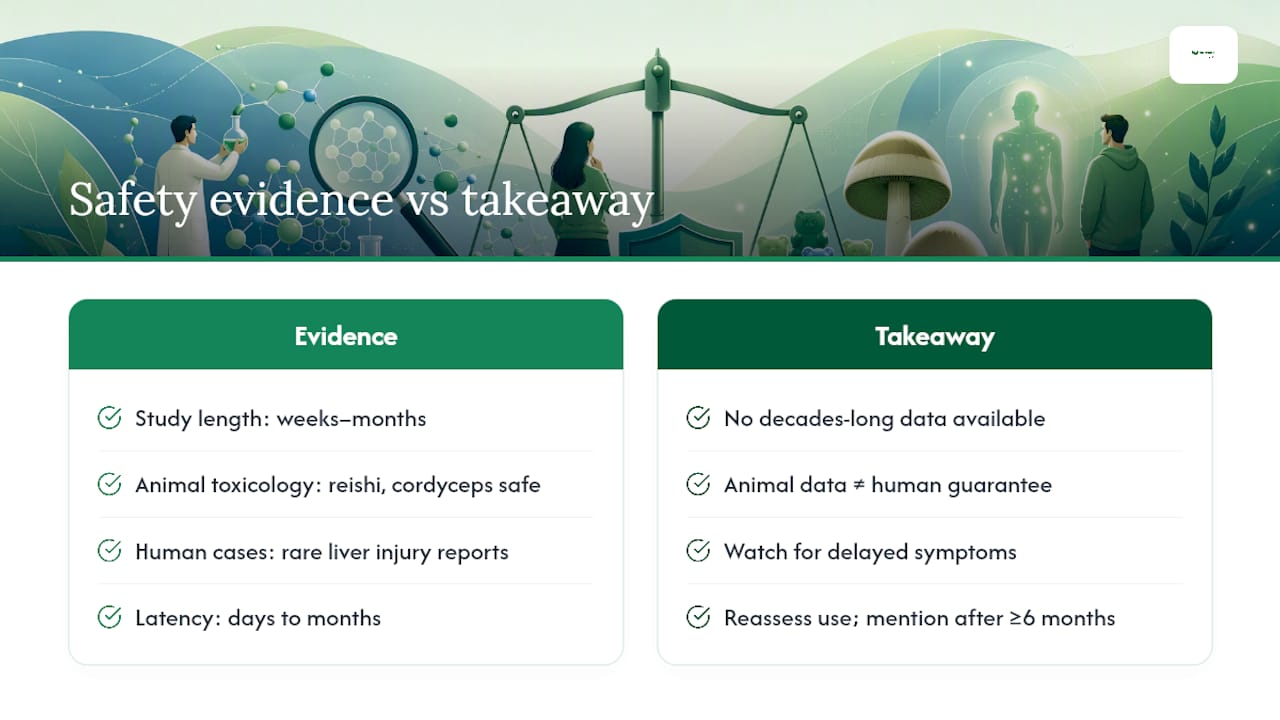
Long-term human safety data on functional mushroom gummies remains thinner than most daily users would probably expect. Most clinical work runs for weeks to a few months, not years, so claims about decades of safe daily use go beyond what’s actually been studied.
What exists is reassuring within its limits. Animal toxicology work on reishi and cordyceps found no adverse effects even at doses exceeding typical human supplement amounts, which suggests a reasonable safety margin for short and medium-term use at sensible doses, per the Frontiers in Toxicology assessment. That’s animal data, though, not a guarantee for every human body over years of continuous use.
The rare liver injury reports tied to reishi are the clearest signal that “natural” doesn’t automatically mean risk-free over time. Cases documented in the NCBI liver injury review show latency periods ranging from days to months, meaning a problem can surface well after you’ve started, not just in the first week.
The sensible approach for daily users is periodic reassessment rather than indefinite, unmonitored use. If you’ve taken the same mushroom gummy daily for six months or longer, it’s worth mentioning to your GP at a routine check-up, particularly if you’re also on regular medication. Cycling off for a short period occasionally, and paying attention to how you feel, gives you a more honest read on whether the product is still doing what you want it to.
Symptoms and management of overdose or adverse reactions
True overdose from functional mushroom gummies is uncommon, largely because these products are formulated at modest doses. Adverse reactions are more likely to stem from an allergic response, a drug interaction, or a contaminated batch than from simply taking too much of a well-made product.
Watch for these signs and respond accordingly:
- Mild digestive symptoms (bloating, gas, nausea): stop taking the gummy for a few days, then reintroduce at a lower dose.
- Headache or dizziness: reduce to half a serving and reassess after a week.
- Skin rash, hives, or swelling of the lips, face, or throat: stop immediately and seek urgent medical care. This can indicate a serious allergic reaction.
- Jaundice, dark urine, or unusual fatigue: stop the product and contact a doctor promptly. These can be early signs of liver involvement.
- Unexplained bleeding or bruising: stop and speak to a clinician, particularly if you’re also on blood thinners.
- Seizures, hallucinations, or confusion: seek emergency care immediately, especially in children or anyone taking multiple mushroom products at once.
If you’re ever unsure whether a reaction is serious, treat it as serious. Bring the product packaging with you to any medical appointment or emergency visit, since the exact species, dose, and any other ingredients in the gummy will help a clinician assess what’s happening far faster than a description alone.
When to consult a healthcare professional about mushroom gummies
A quick conversation before you start is worth more than troubleshooting after a reaction. Speak to a GP or pharmacist if you’re on any prescription medication, particularly anticoagulants, blood pressure drugs, or diabetes treatment, since mushroom gummies can interact with all three.
Pregnant or breastfeeding people, and anyone considering a mushroom gummy for a child, should treat this as a non-negotiable step rather than an optional one. The same goes for anyone with liver disease or an autoimmune condition, given the documented rare cases involving liver injury.
When you do speak to a healthcare professional, bring the actual product label or packaging rather than just describing it from memory. Species, extract ratio, and per-serving dose all affect the advice you’ll get, and vague descriptions make it harder for a clinician to spot a genuine interaction risk. If you’re due for surgery, mention any mushroom supplement you’re taking during your pre-operative assessment, since some formulations may affect clotting.
Nu Sante Nutrition’s approach: formulation and transparency as risk management
Reducing risk with functional mushroom gummies comes down to two things: sensible potency and honest labelling. Some brands build their Mushroom Gummies around clean formulations with natural ingredients, no artificial additives, and a full ingredient panel readers can actually check against the guidance above.
If you want to get comfortable reading a label properly, checking species, extract ratios, and batch testing before you commit to a product, this practical guide to label checks walks through exactly what to look for.
Good manufacturing practice lowers the odds of contamination or mislabelling. It doesn’t replace a conversation with your GP or pharmacist if you’re on medication, pregnant, or managing a chronic condition. Those two things work together, not as substitutes for each other.
— Andy
Where to find transparent, moderate-strength mushroom gummies
Some mushroom gummy products are formulated at a moderate potency with a full ingredient panel listed on their product pages, so you can check exactly what you’re taking against the buying checklist above before it arrives at your door.
That transparency extends to how the product is described: no hidden proprietary blends, no vague dosing, just a straightforward panel you can compare against a certificate of analysis. If you’re switching from capsules or powders and want something that fits into a daily routine without extra hassle, the Nu Sante Nutrition product range covers Mushroom Gummies alongside Ashwagandha, Magnesium, and five other gummy lines built around the same clean-formulation approach. Visit the product page to check current lab reporting and place an order.
This article is general information, not a substitute for advice from a qualified doctor. Consult a qualified healthcare professional about your own circumstances before acting on anything here.
Sources
- Reishi mushroom | WebMD
- Herb- and mushroom‑related liver injury review (NCBI Bookshelf)
- Mushroom dietary supplements | Office for Product Safety & Standards (OPSS)
FAQ
Are mushroom gummies safe for daily use?
For most healthy adults, yes, since reported side effects are generally mild and uncommon. People on medication, pregnant, or managing chronic conditions should check with a clinician first.
What are the most common mushroom gummy side effects?
Digestive upset (bloating, gas, diarrhoea), mild headache, and dry mouth are the most frequently reported reactions across reishi, lion’s mane, and cordyceps.
Can mushroom gummies cause allergic reactions?
Yes, though it’s uncommon. Watch for hives, itching, or swelling of the face or throat, and seek urgent care if these appear.
Do mushroom gummies interact with medication?
Reishi in particular can interact with blood thinners and blood pressure medication, so anyone on these drugs should speak to a pharmacist before starting.
How can I tell if a mushroom gummy is good quality?
Check for a named species, a clear dose per serving, and a batch-specific certificate of analysis testing for contaminants; Nu Sante Nutrition’s Mushroom Gummies publish a full ingredient panel to support exactly this kind of check.
How much does Nu Sante Nutrition’s mushroom gummies cost?
Current pricing is available directly on the Nu Sante Nutrition website.