
Only When Deficient: Vitamins That Boost Energy After a Blood Test
Iron, vitamin B12, vitamin D and magnesium are the nutrients most consistently linked to fatigue, alongside CoQ10 for certain groups. The evidence is clear on one point: these supplements restore normal energy when a deficiency exists, but they do little for someone whose levels are already adequate. If tiredness has lasted more than a few weeks, a blood test with your GP matters more than another bottle of tablets.
TL;DR:
- Supplementation effectively reduces fatigue only when a deficiency is confirmed through blood tests, especially for iron, B12, vitamin D, and magnesium.
- Iron supplementation benefits menstruating women with low ferritin, even without anemia, but excess iron can cause health issues if taken without medical supervision.
- CoQ10 shows significant fatigue reduction when taken at 200 to 300 mg daily for at least three months, while other nutrients often require weeks to show noticeable effects.
- Testing is crucial for at-risk groups such as vegans, older adults, and those with limited sun exposure before starting targeted supplements.
- Building consistent sleep, hydration, and balanced diet habits are fundamental; supplements are secondary tools to address specific deficiencies identified by blood work.
Table of Contents
- How vitamins to boost energy work at a biochemical level
- What the evidence actually shows for each nutrient
- Who should get tested before supplementing
- Choosing and using supplements safely
- Building daily habits that actually sustain energy
- Why “energy vitamins” get oversold, and what actually matters
- A convenient way to close a confirmed gap
- Sources
- FAQ
How vitamins to boost energy work at a biochemical level
Vitamins don’t generate energy the way food or oxygen does. They act as cofactors, the small helper molecules that let enzymes complete each step of turning food into usable fuel. Take away one cofactor, and the whole chain slows down, even if every other ingredient is present in abundance.
The citric acid cycle and electron transport chain depend on a specific lineup of nutrients to convert glucose and fat into ATP, the molecule your cells actually run on. Iron carries oxygen to tissues that need it for that conversion. B vitamins drive several steps of glycolysis directly. Magnesium stabilises ATP itself, so without enough of it, the fuel your body makes is harder to use. This is why topping up a nutrient you’re not short on rarely does anything, and why correcting a genuine shortfall can lift fatigue within weeks.
- Iron: carries oxygen to muscles and organs; low levels blunt oxygen delivery long before anaemia shows up on a standard check.
- B vitamins (B12, B2, folate): drive enzymatic steps in glycolysis and red blood cell formation.
- Magnesium: stabilises and activates ATP, the cell’s energy currency.
- Vitamin C: supports iron absorption and collagen synthesis, indirectly aiding energy metabolism.
- Vitamin D: linked to muscle function; low levels associate with weakness and fatigue.
What the evidence actually shows for each nutrient
Not every “energy vitamin” carries the same weight of proof. Some have strong, repeated trial support. Others are more circumstantial, useful for certain people rather than everyone reaching for the same bottle.
Iron has the clearest case among menstruating people. Clinical trials show iron supplementation reduces fatigue in women with low ferritin even without full anaemia, which makes it one of the most treatable, and most overlooked, causes of persistent tiredness. Self-treating with iron without a blood test is still a bad idea, since excess iron accumulates in the liver and heart over time.
B12 and B-complex matter most for vegans, older adults, and anyone with absorption issues (coeliac disease, long-term proton-pump inhibitor use). A study of 119 young British women found that riboflavin (B2) supplementation for eight weeks improved haemoglobin-related markers and eased iron-related fatigue in those who were mildly deficient. If your B12 is already mid-range or higher, don’t expect the same lift.
Vitamin D deficiency associates with muscle weakness and low energy, particularly relevant for anyone with limited sun exposure, darker skin, or who spends most of the year indoors.
Magnesium is essential for ATP function, and several trials suggest supplementation may ease exercise-related fatigue, though high doses can trigger diarrhoea, so the formulation matters as much as the dose.
CoQ10 in numbers: a 2022 systematic review pooling 13 randomised controlled trials and 1,126 participants found CoQ10 significantly reduced fatigue scores, with the strongest results at 200 to 300 mg daily sustained for three months or longer.
Ashwagandha and other adaptogens work differently again. Rather than acting as metabolic cofactors, they appear to ease fatigue indirectly by lowering stress and improving sleep quality. That’s a real mechanism, just not the same one as correcting an iron or B12 shortfall, and the timeframes for feeling a difference vary accordingly.
Across all of these, expect weeks rather than days before you notice a change, and remember that trial results describe averages across specific populations. What worked for iron-deficient women in a study doesn’t automatically apply to someone with normal ferritin who’s just sleeping badly.
Who should get tested before supplementing
Certain groups carry a higher baseline risk of nutrient-driven fatigue, and testing before buying is the sensible order of operations, not an afterthought.
- Vegans and vegetarians: limited dietary B12 and lower iron bioavailability from plant sources raise deficiency risk.
- Menstruating people: regular blood loss makes iron and ferritin depletion common, even without diagnosed anaemia.
- Older adults: reduced stomach acid impairs B12 absorption, and skin becomes less efficient at making vitamin D.
- Anyone with limited sun exposure: office-based routines or northern latitudes increase vitamin D risk through the darker months.
- People on restrictive diets or certain medications: metformin, long-term antacids, and some anticonvulsants all interfere with nutrient absorption.
Ask your GP about ferritin, a full blood count, B12, 25-hydroxyvitamin D, thyroid function, and magnesium where relevant. Persistent, unexplained fatigue deserves proper investigation, since supplements can mask an underlying condition and delay the real diagnosis.
Choosing and using supplements safely
Once a test confirms a specific gap, a targeted, single-nutrient product usually makes more sense than a broad multivitamin. Multivitamins suit people managing several mild shortfalls at once rather than one clear deficiency.
- Typical adult ranges: iron 15 to 65 mg (only as directed), vitamin B12 250 to 1,000 mcg, vitamin D 400 to 2,000 IU, magnesium 200 to 400 mg.
- Iron can cause constipation or nausea; magnesium (especially oxide forms) can cause loose stools, and citrate is often better tolerated.
- Iron interacts with levothyroxine and some antibiotics; separate doses by several hours.
- Vitamin D has an upper safety limit; check with a pharmacist before combining high-dose supplements with fortified foods.
- Look for third-party testing statements or GMP certification on the label as a basic quality marker.
Pro Tip: Take iron on an empty stomach with a source of vitamin C, orange juice or a bell pepper, since vitamin C improves absorption of non-haem iron from plants and supplements alike.
Building daily habits that actually sustain energy
Supplements correct a deficit; they don’t replace the basics that keep energy stable day to day. Consistent, quality sleep does more for daytime energy than almost any single nutrient.
- Keep a fixed sleep and wake time, even at weekends, and build in a wind-down routine.
- Drink water consistently through the day rather than catching up after you already feel sluggish.
- Pair iron-rich foods (red meat, lentils, spinach) with vitamin C sources to improve absorption.
- Include magnesium-rich foods like nuts, seeds and wholegrains alongside any supplement.
- Pace exercise sensibly and track changes with a simple symptom diary, then retest bloods after two to three months.
Why “energy vitamins” get oversold, and what actually matters
The supplement aisle sells the idea that energy comes in a bottle. It mostly doesn’t. The honest version of this story is duller and more useful: most adults who feel constantly tired have one of a handful of identifiable, testable deficiencies, and fixing that specific gap solves the problem far more reliably than stacking five different pills on the hope that one of them helps.
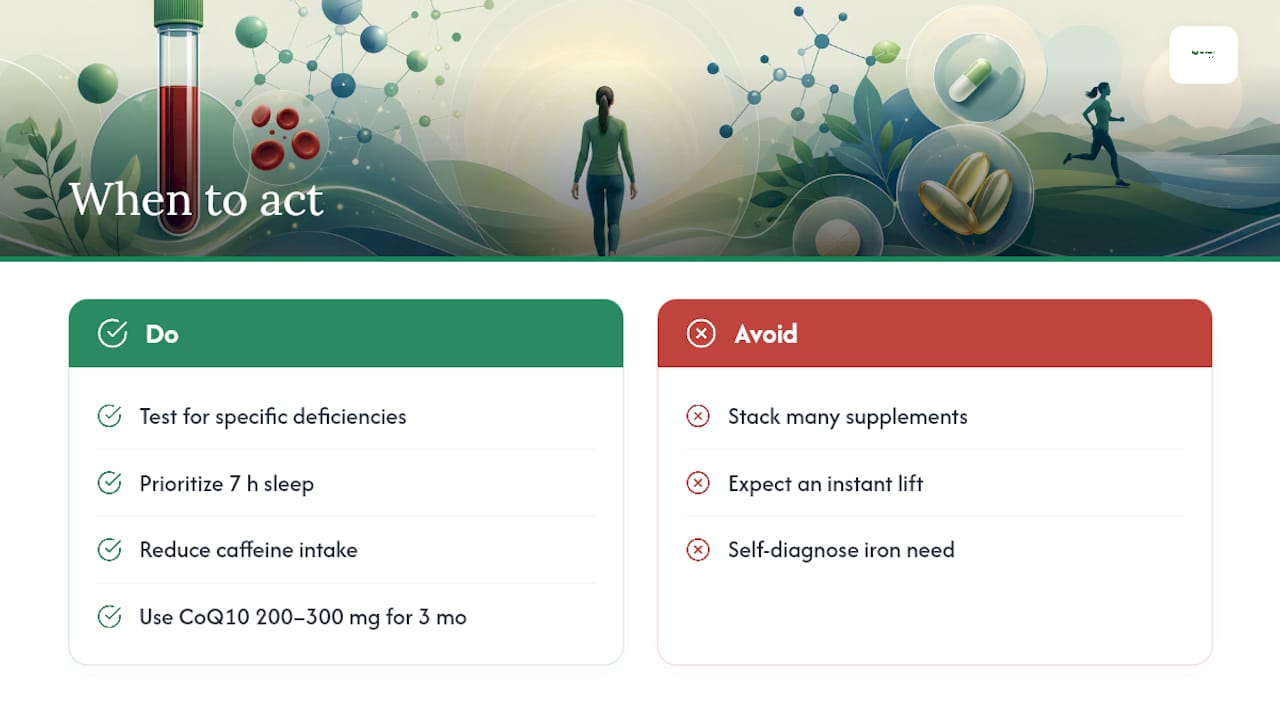
What gets underestimated is how much sleep and stress do to mimic a nutrient deficiency. Someone convinced they need iron might actually need seven consistent hours of sleep and a lighter caffeine habit. Adaptogens like ashwagandha sit in an interesting middle ground here. They’re not cofactors in ATP production, but by easing stress and improving sleep, they can address the real driver of fatigue in people whose bloods come back normal.
The other underrated point: dosage and duration matter more than most marketing admits. CoQ10 needed three months at 200 to 300 mg daily to show its effect in trials, not three days. Anyone expecting an instant lift from a single tablet is chasing the wrong metaphor. Energy from nutrients is a repair process, not a switch.
— Andy
A convenient way to close a confirmed gap
Once a blood test points to a specific shortfall, the next question is simply how to take what you need without it becoming another chore. A gummy supplement range can help bridge the gap between “I know what I need” and “I’ll actually keep taking it.” No capsules to choke down, no powders to measure, just a daily gummy that fits into a routine you already have.
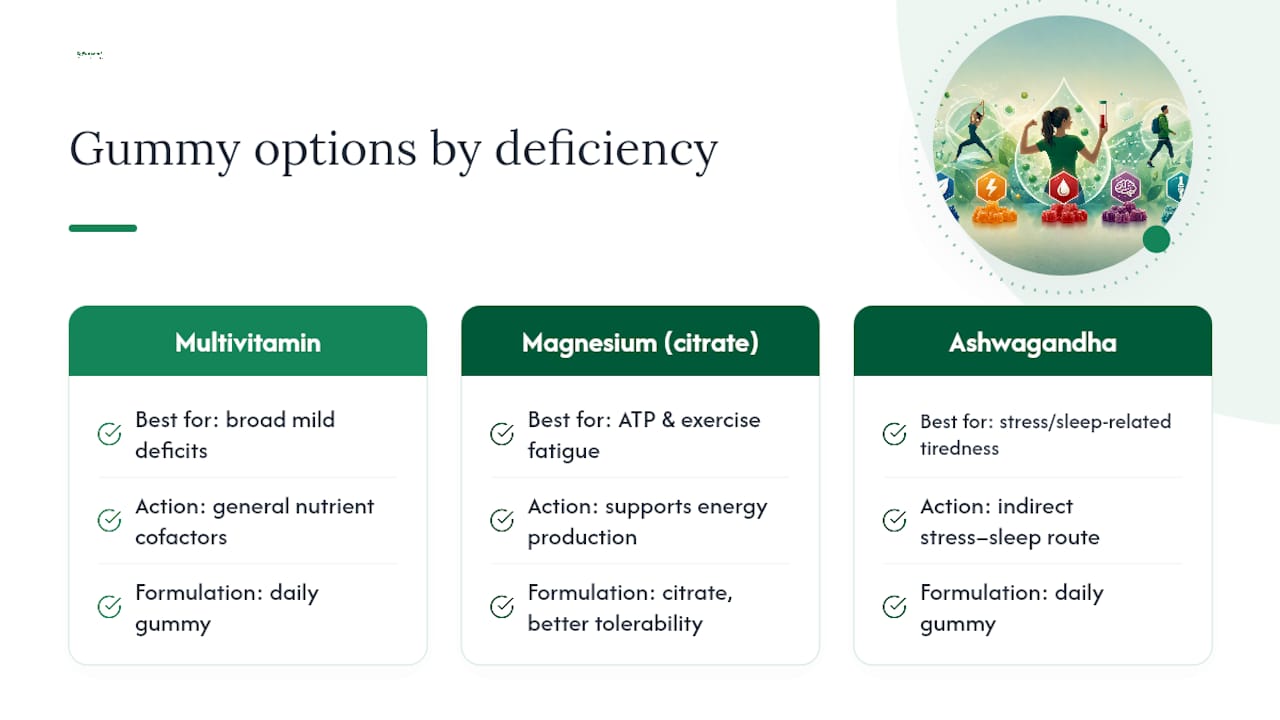
The range maps directly onto what this article covers. Multivitamin gummies suit broader, milder shortfalls rather than one isolated deficiency. Magnesium gummies address the ATP and exercise-fatigue angle discussed above, in a citrate-friendly formulation chosen for better tolerability. Ashwagandha gummies fit the indirect, stress-and-sleep route to energy rather than the direct cofactor route, worth exploring if your bloods come back clear but you’re still exhausted.
Match the product to your test results, not the other way round, and check with a pharmacist or GP on dosing if you’re on other medication. Browse the full range at Nu Sante Nutrition to find the gummy that fits what your body is actually short on.
This article is general information, not a substitute for advice from a qualified doctor. Consult a qualified healthcare professional about your own circumstances before acting on anything here.
Sources
- Best vitamins and minerals for energy - Harvard Health
- Vitamins and minerals for energy, fatigue and cognition — PMC review
- Riboflavin supplementation study (PubMed)
FAQ
What vitamin gives you the most energy?
No single vitamin universally boosts energy. Iron, B12 and vitamin D show the strongest effects, but only for people who are actually deficient in them.
What vitamins am I lacking if I’m always tired?
Persistent tiredness most often traces back to low iron or ferritin, vitamin B12, vitamin D, or magnesium, all of which are checkable with a simple blood panel.
What is the best vitamin for tiredness and fatigue?
There isn’t one best option; it depends on which nutrient a blood test shows is low. Iron and B12 have the strongest evidence for reversing fatigue in deficient people, while CoQ10 shows benefit at 200-300 mg daily sustained for three months or longer.
How do I get my energy levels up?
Start with sleep consistency, hydration and a balanced diet, then get a blood test if fatigue persists beyond a few weeks. Targeted supplementation, such as magnesium or multivitamin gummies, helps once a specific gap is confirmed rather than beforehand.