

Multivitamin for vegans: what you actually need
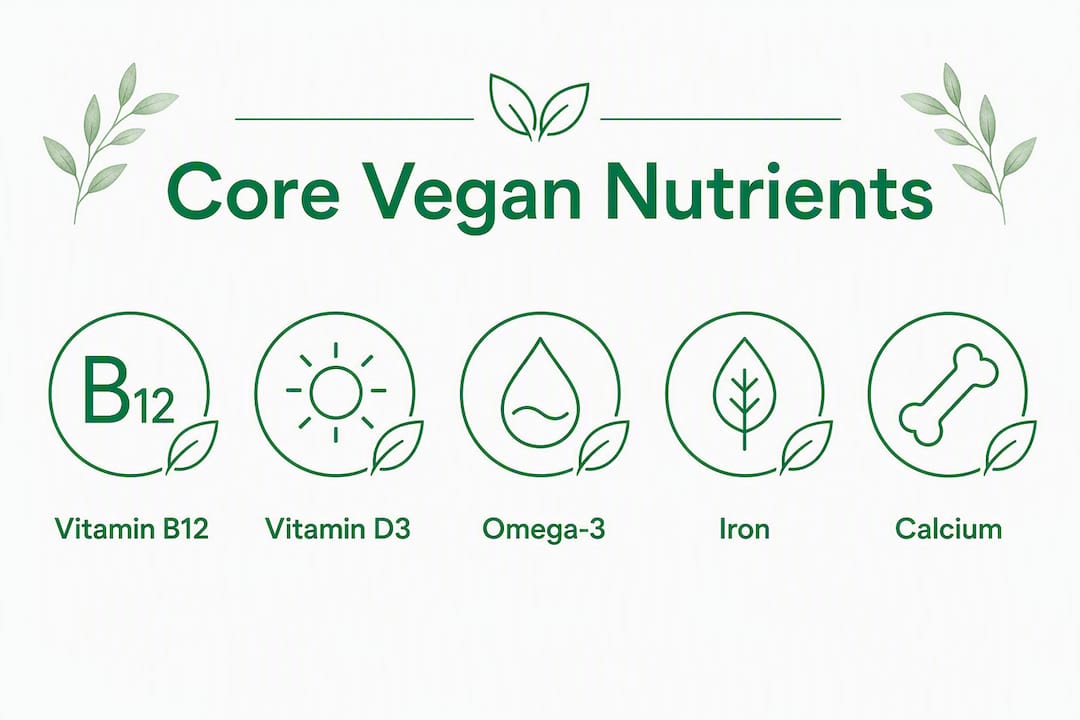
A vegan multivitamin should reliably deliver vitamin B12 (as methylcobalamin), vitamin D3 from lichen, and an algal omega-3 providing DHA and EPA. Those three cover the nutrients most consistently absent from plant-based diets. Iodine and iron are also commonly relevant, particularly for those who avoid iodised salt and seaweed. Up to 92 % of vegans may not get enough vitamin B12 without supplementation or fortified foods, making a targeted supplement less optional and more practical. The NHS and The Vegan Society both flag B12 and vitamin D as priority nutrients for people following plant-based diets in the UK.
TL;DR checklist:
- B12 as methylcobalamin, at a meaningful dose (not just the RNI of 1.5 µg)
- Vitamin D3 from lichen (not D2, not lanolin-derived D3)
- Algal omega-3 providing both DHA and EPA
- Iodine, if you do not regularly eat seaweed or iodised salt
- Iron (as bisglycinate), if blood tests show low ferritin
Nu Sante Nutrition’s Multivitamin Gummies cover these bases in a convenient, plant-based gummy format. Details and a dosage table are in the recommended option section below.
Table of Contents
- Which nutrients should a vegan multivitamin contain?
- How to read a supplement label properly
- Who actually benefits from a vegan multivitamin?
- Gummies vs tablets vs capsules: which form suits you?
- Nu Sante Nutrition Multivitamin Gummies: a practical UK option
- Safety, interactions and when to check with a professional
- Key takeaways
- The case for keeping it focused
- Nu Sante Nutrition Multivitamin Gummies: where to buy in the UK
- Useful sources and further reading
Which nutrients should a vegan multivitamin contain?
Most people eating a well-planned vegan diet get adequate vitamin C, vitamin E, and many B vitamins from whole foods. The gaps that matter are more specific.
- Vitamin B12. No reliable plant food provides active B12. The NHS advises vegans to take a B12 supplement or eat fortified foods daily. The RNI for adults is 1.5 µg, but practitioners recommend higher supplemental doses because absorption drops sharply at higher intakes and the body relies on passive diffusion for larger amounts.
- Vitamin D3 (from lichen). Most UK residents are at risk of low vitamin D between October and March, and vegans have fewer dietary sources. The NHS recommends 10 µg (400 IU) daily for the general population. Lichen-derived D3 is the plant-based form of cholecalciferol; D2 (ergocalciferol) is also vegan but less effective at raising serum 25(OH)D.
- Omega-3 (algal DHA/EPA). Flaxseed and walnuts provide ALA, but conversion to DHA and EPA is poor in most people. Algal oil is the direct plant-based source of DHA and EPA, the forms the brain and cardiovascular system actually use.
- Iodine. Dairy and fish are the main UK dietary sources. Vegans who do not eat seaweed or iodised salt regularly often fall short. The UK RNI is 140 µg per day for adults.
- Iron. Plant-based iron (non-haem) is less well absorbed than haem iron from meat. Women of reproductive age and those with low ferritin are most at risk.
- Calcium. Achievable through fortified plant milks and tofu, but worth checking if those are not daily staples.
- Zinc. Phytates in wholegrains and legumes reduce zinc absorption; vegans may need slightly higher intakes than omnivores.
Statistic: Jusqu’à 92 % des végétaliens pourraient manquer de vitamine B12 sans supplémentation ou aliments enrichis.
Nutrients you generally do not need to supplement on a varied vegan diet include vitamin C, folate, and vitamin K1. Excess fat-soluble vitamins (A, D, E, K) can accumulate, so check upper limits before taking high-dose single-nutrient products on top of a multivitamin.
How to read a supplement label properly
Start with the nutrient form, not the amount. A label showing 500 µg of B12 as cyanocobalamin is less useful than 100 µg as methylcobalamin, because methylated and chelated forms bypass common absorption bottlenecks.
Preferred forms to look for:
- B12: methylcobalamin, or a methylcobalamin/adenosylcobalamin combination
- Vitamin D: cholecalciferol from lichen (labelled “lichen-derived” or “plant-based D3”)
- Omega-3: algal oil, with DHA and EPA stated separately in mg
- Iron: iron bisglycinate (chelated); avoid ferrous sulphate in gummies — it can cause GI discomfort
- Iodine: potassium iodide or sodium iodide
Dosing statements. Gummies often require two or more per serving to reach the labelled dose. Multivitamin gummies vary in active ingredient concentration, and a single gummy may contain only a fraction of the therapeutic amount. Always check the “per serving” column, not the “per gummy” column.
Red flags:
- “Proprietary blend” with no individual amounts listed
- Gelatin in the gummy base (not vegan)
- Added sugar above 2–3 g per serving
- Percent RNI figures that look impressive but hide a low absolute dose (e.g. 100% RNI of B12 = only 1.5 µg)
B12 dose reference
| Reference point | Amount |
|---|---|
| UK adult RNI (daily requirement) | 1.5 µg |
| Typical low-dose supplement | 10–25 µg |
| Upper tolerable intake (UK/EU) | Not formally established; high doses generally considered safe |
Pro Tip: Check whether the label states “per serving” or “per gummy.” Multiply the per-gummy figure by the serving size to get the actual daily dose. If that calculation requires eating four or more gummies to hit a therapeutic B12 level, the product may not be cost-effective.
Who actually benefits from a vegan multivitamin?
Many vegans benefit from a targeted supplement, but the need varies. Supplements work best as gap-fillers, not as a replacement for a varied diet.
Groups most likely to need a multivitamin:
- Pregnant and breastfeeding people. B12, iodine, and vitamin D requirements increase significantly. NHS guidance recommends folic acid (400 µg) before and during early pregnancy, plus vitamin D throughout.
- Older adults (over 65). B12 absorption declines with age due to reduced stomach acid. Vitamin D needs also increase.
- Low-calorie eaters. Anyone eating below roughly 1,600 kcal per day may struggle to meet micronutrient targets from food alone.
- Those with limited access to fortified foods. Fortified plant milks and cereals provide B12, D, and iodine for many vegans; without them, gaps appear quickly.
- People with absorption issues. Conditions such as Crohn’s disease, coeliac disease, or a history of gastric surgery reduce nutrient absorption across the board.
Self-check signals that suggest testing is worthwhile:
- Fatigue, brain fog, or tingling in hands and feet (possible B12 deficiency)
- Muscle weakness or low mood in winter months (possible vitamin D deficiency)
- Heavy periods or persistent tiredness (possible low iron)
- No fortified foods in the daily diet
Useful tests: serum B12 and methylmalonic acid (MMA) for functional B12 status; 25(OH)D for vitamin D; ferritin for iron stores. A GP or pharmacist can interpret results and adjust dosing accordingly.

Gummies vs tablets vs capsules: which form suits you?
Form matters for convenience and adherence, but not for nutrient identity. The same methylcobalamin works whether it comes in a gummy or a capsule.
Gummies
- Pros: easy to take, no swallowing difficulty, enjoyable taste improves consistency
- Cons: require multiple gummies to reach therapeutic doses for some nutrients; contain added sugar (check per-serving amount); pectin-based gummies are vegan, gelatin-based are not; heat and humidity can degrade active ingredients faster than tablets
Tablets
- Pros: high dose concentration per unit, long shelf life, no added sugar
- Cons: some people find them hard to swallow; binders and fillers vary in quality
Capsules
- Pros: clean ingredient lists, easy to open and mix into food if needed, good stability
- Cons: slightly bulkier than tablets; vegan capsule shells (HPMC) cost more than gelatin
Gummy-specific label checks:
- Sugar per serving (aim for under 3 g)
- Number of gummies needed to reach the labelled dose
- Gummy base: pectin (vegan) vs gelatin (not vegan)
- Storage: keep away from heat and direct sunlight
Nu Sante Nutrition Multivitamin Gummies: a practical UK option
Nu Sante Nutrition’s Multivitamin Gummies are a practical choice for UK vegans who want a convenient daily supplement covering the core nutrient gaps. The gummy format removes the barrier of swallowing capsules or tablets, and the formula is plant-based throughout.
Why they suit many vegans:
- Gummy base uses pectin, not gelatin
- Covers B12, vitamin D3, and key minerals in a single daily serving
- UK availability via the Nu Sante Nutrition online store with delivery to UK addresses
- No need to manage multiple separate supplements for the core three
Nutrient overview per serving
| Nutrient | Form | Notes |
|---|---|---|
| Vitamin B12 | Methylcobalamin | Active, well-absorbed form |
| Vitamin D3 | Lichen-derived cholecalciferol | Plant-based D3 |
| Iodine | Potassium iodide | Relevant for those avoiding dairy and fish |
| Iron | Iron bisglycinate | Chelated for better absorption |
| Zinc | Zinc bisglycinate | Chelated form |
Suitability notes:
- Well suited to busy adults who prefer a simple, enjoyable daily routine
- Gummy format means dose per serving is worth checking against therapeutic targets, particularly for B12
- Suitable for vegetarians and vegans; pectin-based gummy shell
- Available direct from Nu Sante Nutrition online; no prescription required
For those who want to support immunity alongside core nutrition, Nu Sante Nutrition’s supplements for immunity guide covers additional nutrients worth considering.
Safety, interactions and when to check with a professional
Multivitamins are safe for most adults, but a few specific checks matter.
Upper limits and excess risk:
- Vitamin A (retinol): rarely present in vegan products, but worth confirming; excess retinol is toxic. Beta-carotene (the plant form) does not carry the same risk at normal supplement doses.
- Vitamin D: the NHS sets the safe upper limit at 100 µg (4,000 IU) per day for adults. Doses above this over time can cause hypercalcaemia.
- Iron: excess iron can cause GI side effects and, in rare cases, toxicity. Do not supplement iron without a confirmed deficiency from a blood test.
- Iodine: the UK safe upper limit is 500 µg per day. High-dose iodine supplements can disrupt thyroid function.
Drug interactions to flag with a pharmacist:
- Iron supplements can reduce absorption of certain antibiotics (tetracyclines, quinolones) and levothyroxine (thyroid medication). Take iron at least two hours apart from these medicines.
- Vitamin K2 (if included in the formula) may interact with warfarin and other anticoagulants. Check with a GP before starting.
- High-dose B6 (pyridoxine) over 10 mg per day long-term has been linked to peripheral neuropathy; check the label if the formula includes B6.
Practical UK steps:
- Check NHS guidance on vitamins and minerals for upper limits before combining supplements
- Keep all supplements out of reach of children
- Consult a pharmacist before starting if you take any prescribed medication
- If you are scheduled for surgery, ask your surgical team whether to pause supplements beforehand
This article is general information, not medical advice. Confirm current guidance with the NHS, your GP, or a registered pharmacist for your own situation.
Key takeaways
A vegan multivitamin should prioritise methylcobalamin B12, lichen-derived D3, and algal omega-3 as the three nutrients most consistently absent from plant-based diets in the UK.
| Point | Details |
|---|---|
| Prioritise nutrient form | Choose methylcobalamin for B12 and lichen-derived D3; chelated minerals absorb better than standard forms. |
| Check per-serving dose | Multiply per-gummy amounts by the serving size; a single gummy rarely delivers a therapeutic B12 dose. |
| Know who needs it most | Pregnant people, older adults, and those without fortified foods in their diet benefit most from a daily supplement. |
| Test before high-dose iron | Only supplement iron after confirming low ferritin via a blood test; excess iron carries real risks. |
| Nu Sante Nutrition option | Nu Sante Nutrition Multivitamin Gummies cover the core vegan nutrient gaps in a pectin-based, UK-available gummy format. |
The case for keeping it focused
Most vegan multivitamins on the market try to do too much. A formula listing 25 or more nutrients looks thorough on the label, but for someone already eating a varied whole-food plant-based diet, most of those additions are redundant. The nutrients that actually matter for vegans are a short list: B12, D3, and an algal omega-3, with iodine and iron as situational additions.
The problem with maximalist formulas is not that extra nutrients are harmful. It is that fitting everything into one product forces compromises. Doses get spread thin. Forms get downgraded to cheaper alternatives to keep costs manageable. A product that lists 25 nutrients at 10% of the RNI each is not a supplement; it is a marketing exercise.
A targeted formula with fewer ingredients, higher doses of what actually matters, and better forms throughout will outperform a crowded label almost every time. That is the logic behind recommending a focused product over a comprehensive one, and it is the standard worth applying when reading any label.
Nu Sante Nutrition Multivitamin Gummies: where to buy in the UK
Nu Sante Nutrition Multivitamin Gummies deliver the core vegan nutrients — B12 as methylcobalamin, lichen-derived D3, chelated iron, and iodine — in a pectin-based gummy that fits a daily routine without effort. No capsules, no powders, no separate bottles for each nutrient.
Before ordering, check the serving size on the label and confirm it aligns with your daily targets, particularly for B12. Store in a cool, dry place away from direct sunlight. If you have questions about the formula or compatibility with your current supplements, Nu Sante Nutrition’s customer support team can help.
Order directly from Nu Sante Nutrition with delivery to UK addresses. Check the product page for current pack sizes and serving counts so you can calculate how long each bottle lasts before reordering.
Useful sources and further reading
- NHS: Vitamin B12 or folate deficiency anaemia — official UK guidance on B12 deficiency symptoms, causes, and treatment; the reference point for UK upper limits and supplementation advice.
- The Vegan Society: Vitamin D — explains why lichen-derived D3 is the preferred plant-based form and gives UK-specific context on sun exposure and supplementation.
- Nu Sante Nutrition Multivitamin Gummies — product facts, serving size, and purchasing information for UK customers.
- Nu Sante Nutrition: supplements for immunity — evidence-based overview of immunity-supporting nutrients; useful for those wanting to extend their supplement routine beyond core vegan gaps.
- Nu Sante Nutrition: magnesium glycinate vs citrate — practical guide to mineral forms and bioavailability; relevant background for understanding why supplement form matters across the board.