
ACV gummies benefits: why most fall short of 20–30 ml trial doses
ACV gummies offer, at best, a modest supporting role for blood sugar and weight, not a standalone fix. Most of the positive research behind apple cider vinegar comes from studies using the liquid form, taken in doses far higher than a gummy provides. Add in the sugar many brands include, and the case for gummies rests more on convenience than proven potency.
TL;DR:
- Most apple cider vinegar gummies contain significantly less acetic acid than the 20-30 ml doses used in studies, making their blood sugar benefits primarily based on convenience.
- Gains in weight loss observed in trials require full liquid doses combined with calorie restriction, and no evidence shows gummies produce similar effects due to their lighter dosing.
- AcV gummies are unlikely to deliver proven cholesterol or detox benefits, with any minor improvements being small, inconsistent, or attributable to added vitamins.
- The acidity of liquid ACV poses a risk to tooth enamel, but gummies mostly avoid this issue; nonetheless, potential side effects include reflux, gastrointestinal upset, and risks for those on certain medications.
- When choosing a product, verify acetic acid content and sugar levels on labels, and consider that liquid forms better match clinical doses for metabolic effects.
Table of Contents
- Acv gummies benefits for blood sugar: what the research actually shows
- What the studies say about weight management
- Beyond blood sugar and weight: sorting the plausible from the marketing
- Side effects, risks and who should be cautious
- How to read the label and use a gummy sensibly
- Where Nu Sante Nutrition stands on the evidence
- When I’d actually reach for an ACV gummy
- Nusante’s ACV gummy: where it fits
- Sources
- FAQ
Acv gummies benefits for blood sugar: what the research actually shows
Trials using liquid apple cider vinegar have found modest reductions in post-meal blood glucose, and in some people with type 2 diabetes, small drops in fasting blood sugar too. Healthline’s review of the research notes these effects typically show up with daily doses of around 20 to 30 millilitres of liquid vinegar, taken consistently over several weeks. That is roughly four to six teaspoons a day, diluted, not a single chewy square.
Gummies rarely get close to that. Most contain a fraction of the acetic acid used in trials, since manufacturers dry or dehydrate the vinegar into powder form and dose it lightly to keep the taste palatable.
The gap in numbers: trial doses run at 20–30 ml of liquid ACV daily. No published trial has tested an equivalent dose delivered through a gummy, and PMC’s review of vinegar mechanisms points out that heterogeneity between studies makes it hard to even set a reliable benchmark.
A few practical points worth holding onto:
- Anyone on insulin, metformin, or other glucose-lowering medication should speak to a clinician before adding ACV in any form, since combined effects on blood sugar are not well studied.
- Added sugars in some gummy formulations can offset the very glycaemic benefit the product claims to offer.
- Consistency matters more than a single dose. Trial benefits accumulated over weeks, not after one gummy.
What the studies say about weight management
A 2018 randomised trial found that participants taking roughly 30 ml of liquid ACV daily, alongside a calorie-restricted diet, lost slightly more weight than those on the diet alone. But later reviews have pulled back on the enthusiasm. Forbes Health’s analysis cites 2020 and 2021 reviews concluding the evidence is too inconsistent to say ACV independently drives meaningful weight loss.
The plausible mechanism involves acetic acid slowing gastric emptying and blunting appetite, an effect documented in mechanistic research indexed on PubMed. The trouble is scale: the effect size in trials was small even at full liquid doses, and no study has tested whether a gummy, delivering a lighter dose, produces anything comparable.
A few things worth weighing before expecting results:
- Weight change in the 2018 trial was modest and occurred only alongside calorie restriction, not from vinegar alone.
- No robust trials exist on gummies specifically, so any weight claim tied to a gummy product is an extrapolation.
- Diet quality and activity levels remain the dominant factors; ACV, in any form, sits at the margins.
Beyond blood sugar and weight: sorting the plausible from the marketing
Some ACV trials report small improvements in cholesterol markers, though the effect is minor and not consistent across studies. Digestion and gut-health claims often borrow credibility from fermented foods generally, but that reasoning does not transfer automatically to a pasteurised, sugar-bound gummy.
Claims about detoxing or immune-boosting sit on particularly thin ground. There is no reliable evidence that ACV gummies clear toxins or meaningfully strengthen immunity. Where a gummy does deliver an energy lift, it is more likely down to added B vitamins than the vinegar itself.
- Cholesterol effects, where reported, are small and inconsistent across trials.
- Microbiome benefits linked to fermented foods do not automatically apply to a gummy format.
- Energy or “detox” claims typically trace back to added vitamins, not the acetic acid content.
Side effects, risks and who should be cautious
Liquid ACV is acidic enough to erode tooth enamel with regular undiluted use, a risk gummies mostly sidestep since the acid is bound into a chewable base rather than sipped directly. That does not make gummies risk-free.
Excess vinegar intake has been linked in some reports to lowered potassium levels, a concern for anyone on diuretics or diabetes medication. NHS guidance on medicines that interact with dietary substances underscores why a clinician check-in matters before adding any new supplement to an existing regimen. Gastrointestinal upset and reflux are also possible, particularly at higher doses.
- Reflux and mild stomach upset are the most commonly reported side effects.
- Anyone on diuretics, insulin, or blood pressure medication should check with a clinician first.
- Label accuracy varies across brands; declared active ingredient content is not always independently verified.
Pro Tip: If you take any prescription medication, ask your pharmacist specifically about vinegar or acetic acid interactions, not just “supplements” generally, since the interaction risk is tied to the acid itself.
How to read the label and use a gummy sensibly
Most gummy labels list “apple cider vinegar” as an ingredient without stating the acetic acid content in milligrams, which makes direct comparison to trial doses difficult. Dose conversion from liquid to solid forms requires lab analysis that most consumer products simply do not publish, so treat any equivalence claim on packaging with scepticism.
A short checklist for evaluating a product before buying:
- Check for acetic acid or ACV powder content on the label, not just the presence of the ingredient name.
- Look at serving size versus daily trial doses. If a label suggests one gummy matches “a shot of ACV,” ask what that shot volume actually was.
- Scan the sugar content per serving. A gummy with several grams of added sugar can work against any glycaemic benefit.
- Match the format to your goal. A gummy suits people who struggle with the taste or ritual of liquid vinegar and want consistency over potency; liquid ACV suits those chasing the doses actually used in trials.
- Start low and monitor. Introduce one gummy at a time and watch for any digestive discomfort before settling into a routine.
The dosing reality: trials use 20 to 30 ml of liquid ACV daily; most gummies deliver a fraction of that acetic acid load. Nutrition experts at Northwestern Medicine suggest that anyone wanting predictable dosing is better served by liquid ACV used in cooking or salad dressings, where the quantity is easier to control. For everyday adherence rather than a specific metabolic target, gummies remain a reasonable, low-risk choice, a trade-off worth understanding when you’re choosing between gummies and capsules for any supplement, not just ACV.
Where Nu Sante Nutrition stands on the evidence
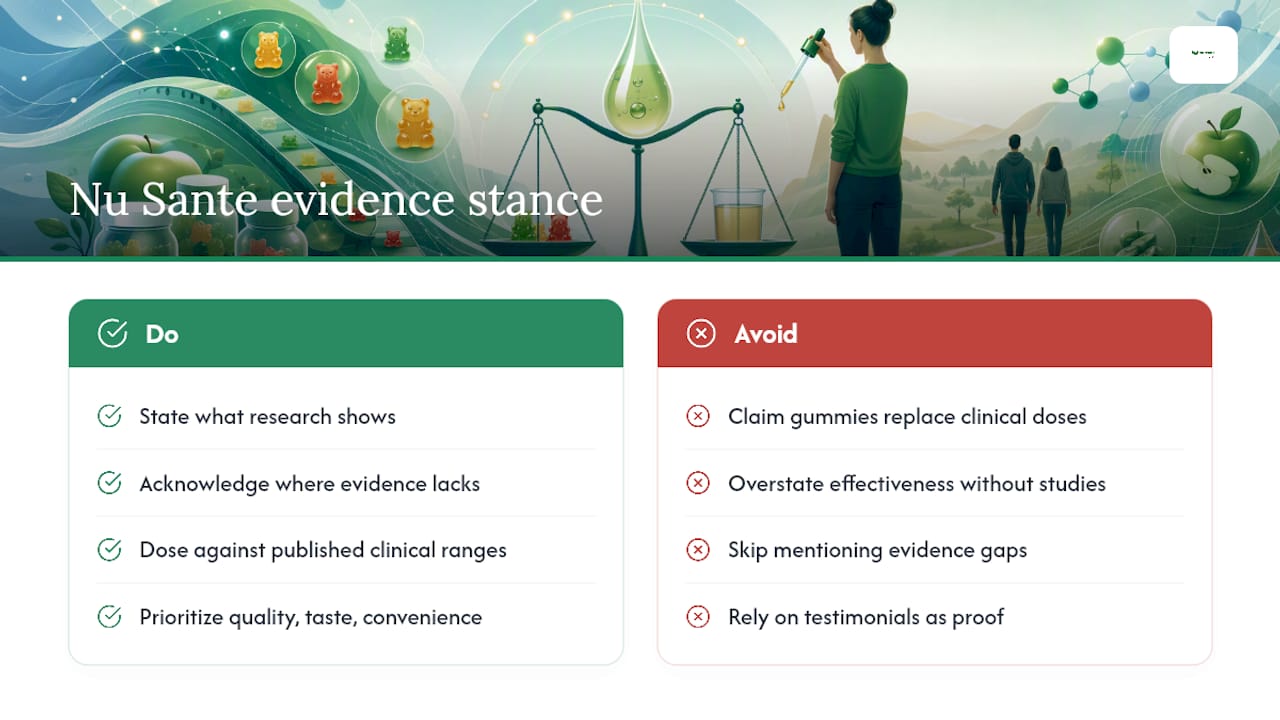
Nu Sante Nutrition builds its gummy range, including Ashwagandha formulations dosed against published clinical ranges, around the same principle applied here: state what the research shows, and where it does not, say so. The brand exists to make daily health routines simple and enjoyable through premium gummy supplements, built for people with busy lifestyles who want a convenient alternative to capsules and powders, from Nu Sante Nutrition.
The range includes Mushroom, Creatine, Ashwagandha, Magnesium, Collagen, Turmeric, ACV Keto, and Multivitamin Gummies, each formulated to support various aspects of wellness, such as energy, focus, relaxation, beauty, and immunity. The products emphasize quality, convenience, and taste, without suggesting that a gummy replaces a clinical dose.
When I’d actually reach for an ACV gummy
I’d suggest a gummy for someone who wants a small, consistent nudge alongside real changes to diet and movement, not a replacement for them. If the goal is closer to the metabolic effects seen in trials, liquid ACV taken diluted in water or a dressing gets you nearer the doses that were actually tested. Anyone with diabetes or kidney disease should run either option past a clinician first.
— Andy
Nusante’s ACV gummy: where it fits
The ACV Keto Gummy is designed for consistency rather than as a substitute for medical treatment. It targets those who find liquid vinegar unpleasant to take daily and prefer a form they can maintain.

Ingredient details, including sugar content per serving, are listed on the product page so you can weigh them against the guidance above before buying. If you’re managing diabetes, kidney concerns, or taking medication that interacts with vinegar, check with a clinician first regardless of which format you choose. For anyone comparing shelf life across a supplement routine, it’s also worth knowing how long gummy potency actually lasts once opened. To see the full formulation and order, visit Nu Sante Nutrition.
Sources
- Apple Cider Vinegar Gummies: Benefits, Research, Nutrition — Healthline
- Apple Cider Vinegar Gummies: Benefits & More – Forbes Health
- PMC review article — source for mechanism and trial heterogeneity
This article is general information, not a substitute for advice from a qualified doctor. Consult a qualified healthcare professional about your own circumstances before acting on anything here.
FAQ
What are the benefits of taking apple cider vinegar gummies?
The main plausible benefits are modest support for post-meal blood sugar and small appetite effects, based largely on studies of liquid ACV rather than gummies directly.
Does apple cider vinegar reduce belly fat?
There’s no solid evidence that ACV targets belly fat specifically; a 2018 trial found small overall weight differences only when combined with calorie restriction, and later reviews called the evidence inconsistent.
What happens if I take apple cider vinegar gummies every day?
Daily use is generally considered low risk for most people, though those on diuretics or diabetes medication should watch for potassium changes and consult a clinician, while others may notice mild digestive upset.
Do ACV gummies actually work?
They may support consistency and mild wellness goals, but no robust trials confirm gummies match the blood sugar or weight effects seen with liquid ACV, since most gummies deliver far less acetic acid than trial doses.