
Stay Under 400 mg: Elemental Magnesium Gummies Dosage for UK Adults
Most magnesium gummies provide various amounts of elemental magnesium per serving, and the NHS advises against taking more than about 400 mg a day from supplements unless a healthcare professional says otherwise. Check the label for “elemental magnesium,” not the total salt weight. Start low, watch for loose stools, and speak to a GP first if you take regular medication or have kidney disease.
TL;DR:
- Magnesium gummies typically contain around 100 to 60 mg of elemental magnesium per piece, which should be multiplied by daily gummies to stay within the 400 mg supplement limit.
- Labels often list total compound weight without clarifying the elemental magnesium, making it crucial to read the Supplement Facts to determine actual usable dose.
- Gummies offer better daily compliance than capsules or powders but do not alter magnesium absorption, which depends on the salt form like glycinate or citrate.
- Using magnesium for sleep or muscle cramps should start with the lowest dose and be monitored for gut tolerance, avoiding doses that cause loose stools within a few days.
- Consult a healthcare professional before exceeding 400 mg daily, especially if on medication or with kidney issues, to prevent possible adverse effects.
Table of Contents
- What magnesium gummies actually contain
- How to read the label for elemental magnesium
- Recommended daily amounts and the supplement ceiling
- Choosing a dose by goal and magnesium form
- Safety, interactions, and when to call a GP
- Storage, quality signals, and building the habit
- Starting magnesium gummies without overthinking it
- Where Nusante magnesium gummies fit into this
- Sources
- FAQ
What magnesium gummies actually contain
A magnesium gummy is a chewable dose built from a magnesium salt, gelling agents, sweeteners, and flavouring. The salt does the work; everything else makes it pleasant to eat. Common salts include magnesium glycinate, citrate, and oxide, each behaving differently once it reaches your gut.
The gummy format itself doesn’t change how well your body absorbs magnesium. What it changes is whether you actually take the supplement every day. Chewing something that tastes like a sweet is an easier habit to keep than swallowing a chalky tablet, and that consistency matters more for long-term benefit than the delivery method. Product formats that improve day-to-day adherence tend to outperform “technically superior” formulations that people quietly stop taking after a fortnight.
The number that actually matters is elemental magnesium, the amount of pure magnesium your body can use, as distinct from the total weight of the compound (magnesium plus whatever it’s bound to). This distinction trips up more buyers than any other part of supplement labelling.
- Elemental magnesium is the figure to compare across brands, not the compound weight on the front of the pack.
- Two gummies from different brands can list wildly different “magnesium citrate” amounts yet deliver similar elemental doses.
- Absorption and gut tolerance depend on the salt form, not on whether the product is a gummy, capsule, or powder.
Pro Tip: If a product’s front label shouts a large number like “500 mg magnesium citrate” but the Supplement Facts panel doesn’t separately state elemental magnesium, treat that as a red flag and check the small print before buying.
How to read the label for elemental magnesium
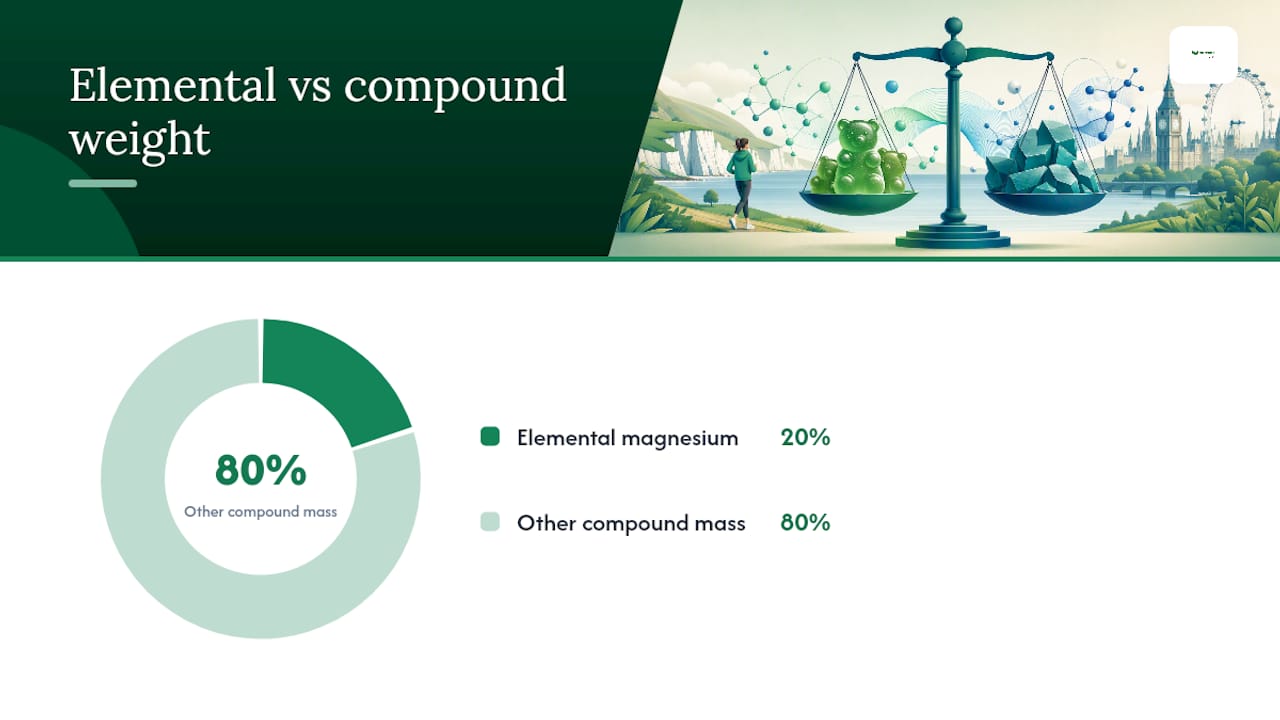
The Supplement Facts panel, not the front of the box, is where the real dosage lives. Look for a line that reads something like “Magnesium (as magnesium citrate) 100 mg” or “Magnesium (as magnesium glycinate) 60 mg.” That number after “Magnesium (as…)” is the elemental amount, and it’s the figure you should be tracking against daily limits, not the total compound weight quoted elsewhere on the pack.
Follow this sequence when checking any product:
- Flip to the Supplement Facts or nutrition panel; ignore front-of-pack marketing numbers entirely.
- Find the word “elemental” or the “(as [compound name])” format next to “Magnesium.”
- Note the mg figure attached to that line, per gummy and per serving (some servings are two gummies).
- Multiply by however many gummies you plan to take daily to get your total elemental intake.
- Compare that total against the recommended range and the supplement ceiling covered below.
Here’s why this matters in practice: magnesium salts are heavier than the elemental magnesium they carry, because the magnesium atom is chemically bound to another compound (citrate, glycinate, oxide) that adds bulk without adding usable mineral. A 500 mg magnesium citrate compound might supply only around 100 mg of elemental magnesium, since the citrate portion accounts for most of that weight. This is standard across mineral supplements, not a quirk of gummies specifically, and it’s exactly the confusion that leads people to think they’re taking five times the dose they actually are. The Food Standards Agency requires supplement labels to declare this clearly, which is why the elemental figure should always be printed, even when it’s in smaller type than the marketing claim above it.
Recommended daily amounts and the supplement ceiling
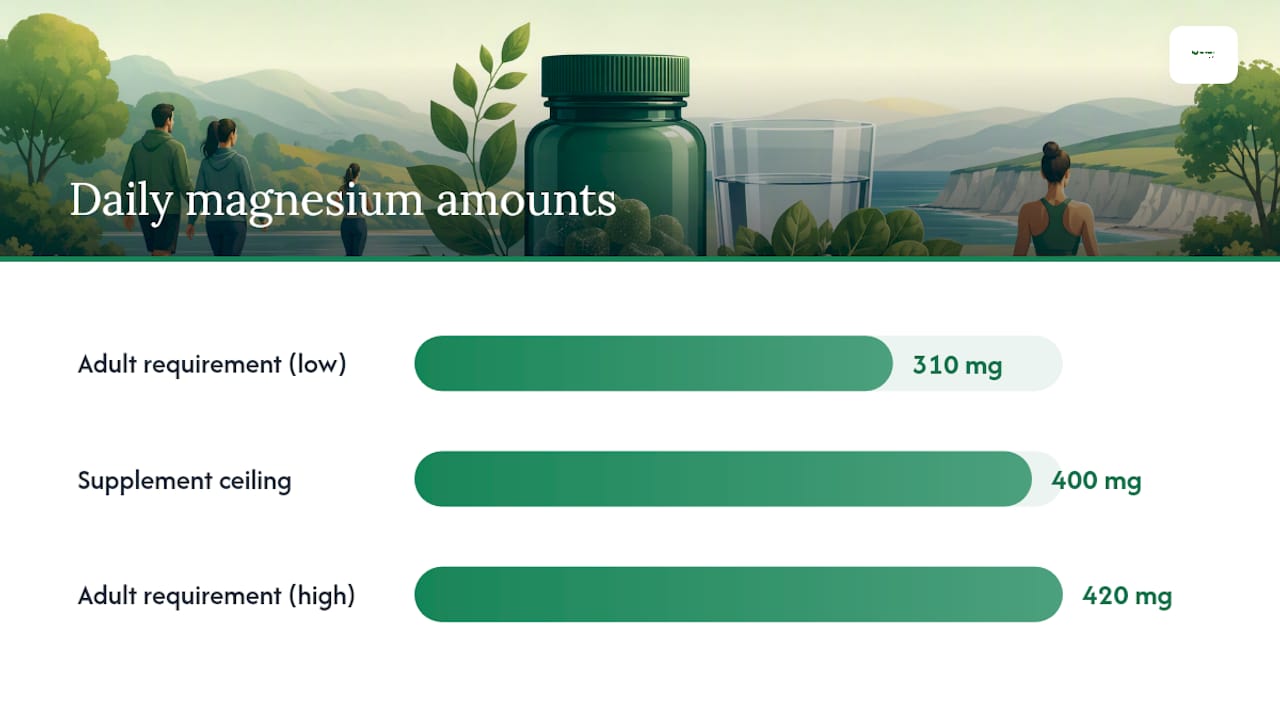
Adult requirements for magnesium generally sit between roughly 310 and 420 mg a day depending on sex, age, and life stage, according to the NIH Office of Dietary Supplements. That figure covers magnesium from food and supplements combined, so it’s not a target you’re meant to hit through gummies alone.
The number that actually governs your gummy dosing is narrower. The NHS states adults shouldn’t exceed around 400 mg a day from supplements specifically, a practical ceiling that exists because supplemental magnesium is far more likely to cause gut upset than magnesium from leafy greens, nuts, or wholegrains. National guidance from bodies like SACN underpins this distinction between food-derived and supplement-only intake.
In practical terms: if your gummies provide 100 mg of elemental magnesium each, four a day would put you at the 400 mg supplement ceiling, before accounting for any magnesium already in your diet. If each gummy provides 50 mg, you’d need eight to reach the same point.
A few things worth holding in mind:
- Your dietary magnesium (spinach, almonds, wholegrain bread) doesn’t count against the 400 mg supplement limit, but it does count toward your total daily requirement.
- Most people who eat reasonably varied diets only need gummies to top up a shortfall, not to supply the bulk of their intake.
- Going over the supplement ceiling doesn’t cause dramatic harm for most healthy adults, but it does raise the odds of gut symptoms considerably.
Choosing a dose by goal and magnesium form
Not all magnesium salts behave the same way once swallowed, and the form you pick should follow your reason for taking it. This is where a lot of generic dosing advice falls short, because “take 200 mg of magnesium” means something different depending on which salt sits behind that number.
For sleep and general relaxation, magnesium glycinate is often favoured because it tends to be gentler on the gut than citrate or oxide, according to clinical review literature. A conservative starting point is one gummy in the evening, roughly 30 to 60 minutes before bed, giving your body time to absorb the dose before you’re trying to sleep. Our comparison of magnesium glycinate versus citrate goes into more detail on why the gentler profile matters for nightly use, and our piece on timing magnesium before bed covers the practical side of when to take it.
For muscle cramps, dose ranges used in trials vary, and the evidence for magnesium specifically resolving cramps is mixed rather than conclusive, so treat any cramp-focused dosing as a trial-and-monitor approach rather than a guaranteed fix.
For constipation or sluggish digestion, citrate and oxide have a stronger laxative pull than glycinate, which is precisely why they’re sometimes used deliberately for that purpose and why they’re the wrong choice if your goal is sleep support without gut disruption.
A sensible pattern across all three goals:
- Start with the lowest dose your product offers, typically one gummy.
- Hold that dose for three to four days before increasing, watching for stool changes.
- If you need more, add gradually rather than jumping straight to the full label serving.
- Consider splitting a higher total dose across morning and evening rather than taking it all at once.
Pro Tip: Loose stools within the first few days of starting a new magnesium product almost always mean the dose is too high for your gut right now, not that magnesium disagrees with you outright. Drop back a gummy and try again in a few days.
Safety, interactions, and when to call a GP
Diarrhoea and abdominal cramping are the most common side effects of magnesium supplementation, and they’re almost always dose-related rather than a sign of an allergy or intolerance. Citrate and oxide forms are more likely to trigger this than glycinate, which is part of why form selection matters as much as the milligram count.
Certain medications interact with magnesium in ways that matter for dosing decisions:
- Diuretics can either increase magnesium loss or, in the case of potassium-sparing types, raise magnesium retention.
- Some antibiotics, including tetracyclines and quinolones, bind to magnesium and lose effectiveness if taken too close together.
- Blood pressure medications can have their effects altered by magnesium’s own mild effect on blood vessels.
- Diabetes medications may need monitoring alongside magnesium supplementation, since magnesium plays a role in insulin function.
If you take any of these regularly, check with a pharmacist or GP before adding a daily gummy, even at a modest dose.
Certain situations warrant more caution than a passing mention. Kidney disease is the clearest red flag: impaired kidneys can’t clear excess magnesium efficiently, allowing it to build up to genuinely dangerous levels, a risk documented in clinical reviews of magnesium safety. Severe heart conditions also warrant medical input before supplementing, since magnesium affects cardiac rhythm at high doses. Symptoms like unusual muscle weakness, very low blood pressure, or an irregular heartbeat after taking magnesium need urgent medical attention, not a wait-and-see approach.
Storage, quality signals, and building the habit
Gummies are more vulnerable to heat and moisture than tablets or capsules, and both can quietly reduce potency over time even before the expiry date. Keep them in a cool, dry cupboard, not a steamy bathroom cabinet or a car glovebox in summer, and check the batch or lot number against expiry information if the product has sat unopened for a while.
When judging whether a product is worth trusting, a few signals separate genuinely transparent brands from vague ones:
- A clearly stated elemental magnesium figure on the Supplement Facts panel, not buried in compound weight alone.
- The specific magnesium salt named outright (glycinate, citrate, oxide), rather than just “magnesium blend.”
- Batch numbers, expiry dates, and ideally some mention of testing or quality control.
- An ingredient list free of vague catch-all terms.
Our buyer’s guide to magnesium glycinate gummies walks through what to check on a product page before buying, which is worth a look if you’re comparing options.
Pro Tip: Take your magnesium gummy at the same point in an existing routine, brushing your teeth, making evening tea, rather than treating it as a separate task. Give it four to eight weeks before judging whether it’s making a difference to sleep or cramping, since magnesium’s effects build gradually rather than overnight.
Starting magnesium gummies without overthinking it
Getting started doesn’t need to be complicated. Check the elemental magnesium figure on whatever product you’re considering, begin at the lowest sensible dose, and give it a fair trial of several weeks before drawing conclusions. Watch specifically for two things: whether sleep or cramping genuinely improves, and whether your gut tolerates the dose without persistent looseness.
If you notice no benefit after two months at a reasonable dose, more magnesium probably isn’t the answer, something else is. And if you’re on regular medication, particularly diuretics or blood pressure drugs, or you have any degree of kidney impairment, get clinical advice before you start rather than after you notice a problem.
— Andy
Where Nusante magnesium gummies fit into this
Nusante’s Magnesium Gummies are built around the same label principle covered throughout this guide: a stated elemental magnesium amount per serving and a named magnesium salt, so you’re never left guessing what you’re actually swallowing.
Certain brands position themselves as offering clean formulations, natural ingredients with no artificial additives, and consistency that fits a daily routine rather than demanding a lifestyle overhaul. That matters more than most people expect: a gummy you’ll actually take every evening beats a technically superior capsule gathering dust in a drawer. As with any magnesium product, stay mindful of the 400 mg supplement ceiling and check with a GP first if you’re on interacting medication or managing kidney disease.
If you want to see exactly what’s on the label before committing to a bottle, the ingredient breakdown and elemental magnesium content are listed on the Nusante product page.
Sources
For anyone wanting to verify the numbers themselves rather than take a brand’s word for it, the NHS page on vitamins and minerals covers supplement ceilings directly, while the NIH fact sheet on magnesium sets out recommended intakes by age and sex. SACN’s dietary reference values explain how UK guidance is derived, and the Food Standards Agency’s supplement guidance covers labelling rules referenced earlier.
This article is general information, not a substitute for advice from a qualified doctor. Consult a qualified healthcare professional about your own circumstances before acting on anything here.
- NHS — Vitamins and minerals
- Gov
- NIH Office of Dietary Supplements — Magnesium (health professional fact sheet)
- PubMed — review on magnesium forms and effects
- Food Standards Agency — Food supplements guidance
FAQ
How many mg of magnesium should I take from gummies daily?
Most people do well with around 100 mg of elemental magnesium from gummies daily, depending on dietary intake and the reason for supplementing. Stay under the NHS supplement ceiling of roughly 400 mg a day unless a healthcare professional advises otherwise.
Do magnesium gummies actually work?
They work as well as any other magnesium format, since absorption depends on the magnesium salt and elemental dose rather than the gummy delivery itself. The main advantage of gummies is that people find them easier to take consistently, which matters more for results than the format itself.
Can magnesium gummies cause diarrhoea?
Yes, particularly with citrate or oxide forms taken at higher doses, and it’s the most commonly reported side effect. Reducing the dose or switching to a gentler form like glycinate, as discussed in clinical reviews of magnesium salts, usually resolves it.
Is it safe to take magnesium gummies every night for sleep?
For most healthy adults, a consistent low-to-moderate dose of magnesium glycinate before bed is considered safe within the 400 mg supplement ceiling. Anyone with kidney disease, heart conditions, or on interacting medication should check with a GP before making it a nightly habit.
What’s the difference between magnesium glycinate and citrate for dosing?
Glycinate is generally gentler on the gut and better suited to nightly use for sleep, while citrate has a stronger laxative effect and is sometimes chosen deliberately for digestion. Both count toward the same elemental magnesium ceiling, so the label’s elemental figure matters more than which salt you choose.