

Multivitamin for men: a practical UK guide
For most UK men, the right daily multivitamin covers vitamin D3, B12, B6, zinc, selenium and magnesium at or near 100% of the Nutrient Reference Value (NRV), skips unnecessary iron, and carries third-party batch testing. That is the short answer. The longer one depends on your age, diet and goals.
Who needs which variant:
- General adult men (18–49): A standard men’s formula with the core nutrients above. No iron unless a clinician has confirmed deficiency.
- Men over 50: Look for higher vitamin D and B12, as absorption of both tends to decline with age.
- Men trying to conceive: Prioritise zinc and the active folate form (methylfolate) to support sperm health.
- Active men and athletes: Magnesium and B vitamins become more relevant; check the formula covers these at meaningful levels.
- Vegans and vegetarians: B12 (as methylcobalamin), vitamin D3 (from lichen), zinc and selenium are the nutrients most likely to be low from diet alone.
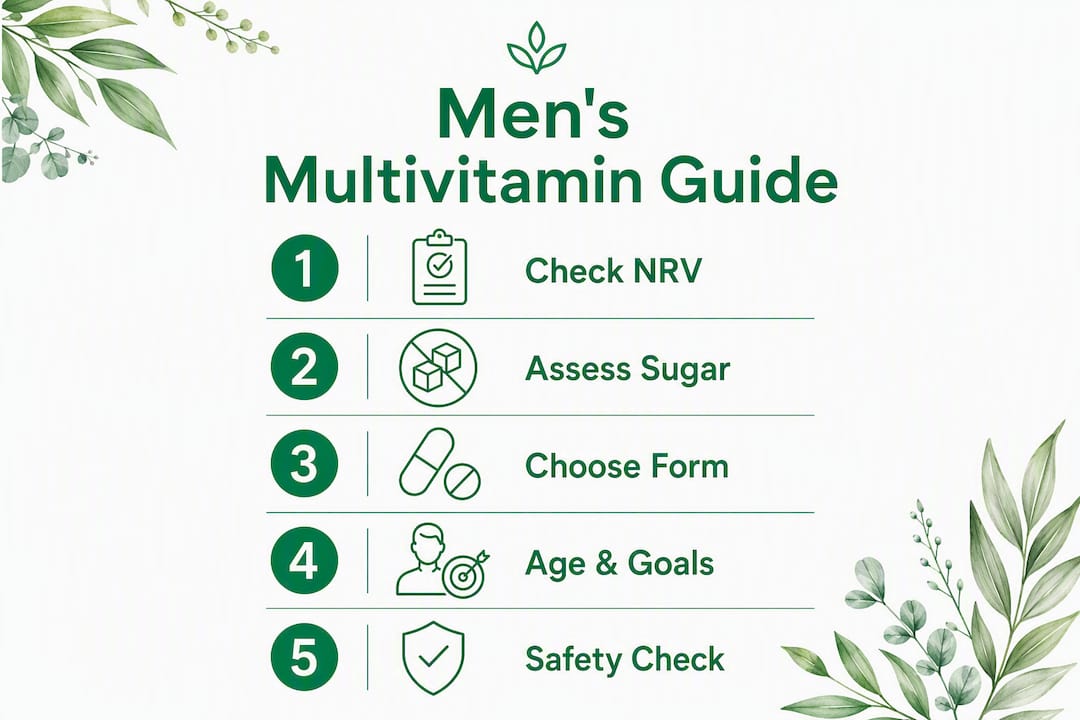
Pro Tip: Before anything else, check three things on the label: the NRV% per nutrient per serving, the sugar content per serving (especially for gummies), and the allergen statement. If the NRV% is missing, put the product back.
Table of Contents
- How do you choose the right multivitamin for men?
- Which vitamins and minerals matter most in a men’s multivitamin?
- How do your age and goals change what you need?
- Tablets, capsules, gummies or liquids: which format suits you?
- What should you check for safety before starting a multivitamin?
- When and how should you take a multivitamin for best results?
- Nu Sante Nutrition multivitamin gummies: what they offer UK men
- Key takeaways
- Why the gummy format is worth taking seriously
- Nu Sante Nutrition multivitamin gummies: UK buying details
- Useful sources and further reading
How do you choose the right multivitamin for men?
Men’s Health rates third-party testing and transparent NRV labelling as the top quality signals for any men’s supplement. Use this checklist before buying.
- Match the formula to your goals. Age, activity level, fertility plans and any chronic conditions should all shape which product you pick. A 28-year-old runner and a 55-year-old with low sun exposure have different priorities.
- Read the label for active forms. Methylfolate is better absorbed than folic acid. Methylcobalamin is the preferred form of B12. Vitamin D3 outperforms D2 for raising serum levels.
- Check NRV% per nutrient. Aim for nutrients at roughly 100% NRV. Anything well below 25% NRV is unlikely to move the needle; anything well above 200% NRV for fat-soluble vitamins warrants caution.
- Confirm no unnecessary iron. Most adult men get adequate iron from diet. Excess iron is associated with oxidative stress. Skip it unless a GP has advised otherwise.
- Look for quality certifications. GMP manufacturing, third-party testing (such as NSF International), and available batch certificates are the clearest markers of a trustworthy product.
- Check for interactions. If you take warfarin, statins or any prescription medicine, speak to a pharmacist before adding a multivitamin. High-dose vitamin K and certain B vitamins can affect drug metabolism.
- Assess sugar and excipients for gummies. Some gummy formats add 3–5g of sugar per serving. Check the total sugar per day and whether the product uses sugar alcohols, which can cause digestive discomfort in some people.
- Calculate cost per daily dose. A lower unit price can mean fewer servings per pack. Divide the pack price by the number of daily doses to compare fairly. Subscription pricing often reduces cost by 10–20% but check the cancellation terms.
Pro Tip: If a product lists a “proprietary blend” without individual nutrient amounts, you cannot verify NRV%. Treat that as a red flag and choose a product with full label transparency.
Which vitamins and minerals matter most in a men’s multivitamin?
Vitamin D, B12, B6, zinc, selenium, magnesium and vitamin C are the priority nutrients for men. Each addresses a gap that diet alone commonly leaves, particularly for men eating a typical UK diet with limited oily fish, limited sun exposure and moderate vegetable intake.

| Nutrient | Primary role for men | Typical UK NRV | Preferred label form |
|---|---|---|---|
| Vitamin D | Bone health, immune function, testosterone support | 5 µg NRV; many experts suggest a higher daily intake | D3 (cholecalciferol) |
| Vitamin B12 | Energy metabolism, nerve function, red blood cell production | — | Methylcobalamin |
| Vitamin B6 | Protein metabolism, hormone regulation, mood | — | Pyridoxal-5-phosphate (P5P) |
| Zinc | Testosterone production, immune defence, sperm quality | — | Zinc bisglycinate or citrate |
| Selenium | Antioxidant defence, thyroid function, sperm motility | 55 µg NRV | Selenomethionine |
| Magnesium | Muscle function, sleep, energy production | — | Glycinate or citrate |
| Vitamin C | Immune support, collagen synthesis, antioxidant | — | Ascorbic acid or sodium ascorbate |
Magnesium form matters more than most labels suggest. Magnesium glycinate absorbs well and is gentler on the gut; magnesium oxide is cheap but poorly absorbed. For men using a multivitamin partly to support sleep or muscle recovery, glycinate is the better choice.
On iron: most men’s multivitamins deliberately exclude iron, and rightly so. UK dietary intake is generally sufficient for adult men, and excess iron can contribute to oxidative stress. The exception is confirmed deficiency, diagnosed via a blood test. Nu Sante’s immunity supplement guide covers vitamin C and zinc in more detail for men focused on immune support.
Label red flags to avoid:
- Nutrients listed without NRV% or amounts
- Vitamin A as retinol at very high doses (upper limit is 3,000 µg/day; long-term excess is linked to bone thinning)
- Niacin (B3) at doses above 17 mg NRV without medical supervision (flushing and liver effects at high doses)
- Iron included without a clear rationale for men
- No mention of manufacturing standard or batch testing
How do your age and goals change what you need?
Nutritional needs shift across a man’s life, and a formula that works at 30 may leave gaps at 55. The right men’s daily vitamins are not one-size-fits-all.
- Young adult men (18–35): A standard men’s formula covering the core seven nutrients above is sufficient for most. Focus on vitamin D (especially in winter), zinc and B12 if diet is variable.
- Active men and athletes: B vitamins support energy metabolism during training; magnesium is lost through sweat. Look for a formula that covers both at meaningful levels. Nu Sante’s stress and energy guide explains the B vitamin and magnesium connection in detail.
- Men trying to conceive: Zinc and selenium are directly linked to sperm motility and morphology. Methylfolate (rather than folic acid) is the preferred folate form for sperm DNA integrity. Some men in this group also consider ashwagandha alongside vitamins for additional support.
- Men over 50: Vitamin D absorption becomes less efficient with age, and B12 absorption can decline as stomach acid decreases. A men’s 50+ formula typically increases both. Prostate-support blends often add lycopene or saw palmetto, though the clinical evidence for these additions is mixed; they are not harmful at typical doses but are not a substitute for medical screening.
- Vegans and vegetarians: B12, vitamin D3 (from lichen), zinc and selenium are the nutrients most at risk from a plant-based diet. Confirm the formula uses lichen-derived D3 rather than lanolin-derived, if that matters to you.
Specialised blends labelled “men’s 50+” or “fertility support” are worth considering when your profile matches, but always check the NRV% rather than relying on the marketing claim on the front of the pack.
Tablets, capsules, gummies or liquids: which format suits you?
Format choice affects whether you actually take the supplement every day. Adherence is the single biggest predictor of whether any supplement works, and gummies consistently outperform tablets on this measure for many people.
Tablets and capsules
- Higher nutrient density per unit; easier to hit 100% NRV for multiple nutrients in two capsules
- No added sugar
- Some people find them harder to swallow consistently
- Better suited to high-potency formulas (e.g. therapeutic vitamin D doses)
Gummies
- Easy to take; no water needed; pleasant taste improves daily adherence
- Sugar content varies: check the label for grams per serving
- Nutrient density is lower per unit; some nutrients (fat-soluble vitamins) may be present at slightly lower levels
- Convenient for travel and busy routines
Liquids and powders
- Useful for men who cannot swallow tablets
- Dosing is less precise; some nutrients degrade faster once opened
- Less common in the UK men’s supplement market
Pro Tip: If you are comparing gummy products, divide the total sugar per pack by the number of servings to get the daily sugar load. Two gummies at 2g sugar each means 4g per day added to your diet. For most men this is minor, but worth knowing if you are managing blood sugar.
What should you check for safety before starting a multivitamin?
Multivitamins are safe for most men when taken as directed, but a few checks matter before you start, particularly if you take prescription medicines.
- Drug interactions: Vitamin K can reduce the effectiveness of warfarin. High-dose B vitamins may interact with certain chemotherapy drugs. Calcium and iron (if present) can reduce absorption of some antibiotics and thyroid medications. Always check with a pharmacist if you take any prescription medicine.
- Tolerable upper limits: Fat-soluble vitamins (A, D, E, K) accumulate in the body. Vitamin A as retinol above 3,000 µg/day long-term is associated with bone thinning. Vitamin D above 100 µg/day without medical supervision carries a risk of toxicity. UK Dietary Reference Values set safe upper intake levels for each nutrient; a well-formulated multivitamin stays within these.
- Allergy statements: Check for soy, gluten, shellfish (some selenium sources) and gelatine (relevant for vegans and vegetarians in gummy products).
- Chronic conditions: Men with haemochromatosis (iron overload disorder) should avoid any formula containing iron. Men with kidney disease should seek medical advice before supplementing minerals.
- NHS vitamin D guidance: The NHS recommends that adults in the UK consider a daily 10 µg (400 IU) vitamin D supplement, particularly from October to March when sunlight is insufficient for skin synthesis. This is one nutrient where routine supplementation has clear official backing for the UK population.
UK food supplement regulations require sellers to label products accurately and to substantiate any health claims. Look for GMP (Good Manufacturing Practice) compliance on the packaging, available batch certificates, and clear NRV% labelling. These are not optional extras; they are the baseline for a trustworthy product.
A significant proportion of UK adults are estimated to have low vitamin D status, particularly during winter months, which is one reason vitamin D appears in virtually every reputable men’s formula. This is general information, not medical advice. Confirm your own status and any supplementation needs with a GP or registered dietitian.
When and how should you take a multivitamin for best results?
Take most multivitamins with food. Fat-soluble vitamins (D, A, E and K) absorb significantly better when consumed alongside a meal that contains some fat. A breakfast with eggs, avocado or full-fat dairy works well.
- Morning with breakfast is the most practical time for most men. B vitamins can be mildly stimulating; taking them in the evening occasionally disrupts sleep for sensitive individuals.
- Split high-dose B vitamins if you notice jitteriness or flushing. Some men do better taking a B-complex in the morning and a separate mineral supplement in the evening.
- Avoid taking with high-dose calcium supplements at the same time, as calcium can compete with magnesium and zinc for absorption. If you take a separate calcium supplement, space it by two hours.
- Consistency matters more than timing. Taking a multivitamin at the same time each day, linked to an existing habit, is more effective than optimising the exact hour.
Pro Tip: Link your multivitamin to a fixed daily habit, such as making coffee or brushing your teeth. Place the bottle next to the kettle or toothbrush. Habit stacking is one of the most reliable ways to maintain daily supplement consistency.

Nu Sante Nutrition multivitamin gummies: what they offer UK men
Nu Sante Nutrition’s multivitamin gummies are formulated for daily use and designed for men who want a convenient alternative to capsules. The gummy format removes the barrier of swallowing tablets and fits naturally into a morning routine.
Key product details:
- Format: Gummy; no water required
- Target users: Adult men seeking a daily nutritional top-up, particularly those with variable diets, busy schedules or a preference for gummy supplements
- Nutrient coverage: Formulated to include the core men’s nutrients (vitamin D, B vitamins, zinc, selenium, magnesium, vitamin C); check the current label on the product page for exact NRV% per serving
- Sugar content: Check the product label for grams of sugar per serving before purchase
- Allergen information: Available on the product page; confirm suitability if you have specific dietary requirements
- Daily dosing: Follow the label instructions; do not exceed the stated dose
- UK availability: Sold directly via the Nu Sante Nutrition online store with UK shipping
- Brand content: Nu Sante publishes evidence-led guides on ingredient choices, including collagen for men and magnesium forms, which reflect the brand’s approach to formulation transparency
Where more validation would strengthen confidence: independent batch certificates and third-party lab reports. Check the product page and brand site for the most current testing documentation. If batch certificates are not yet publicly listed, contact the brand directly before purchasing.
Pro Tip: Choose the gummy format if adherence is your main challenge. Choose a capsule if you need very high doses of a specific nutrient (such as therapeutic vitamin D) that a gummy cannot deliver at the required level.
Key takeaways
A daily men’s multivitamin covering vitamin D3, B12, zinc, selenium and magnesium at around 100% NRV, with third-party batch testing and no unnecessary iron, is the most practical starting point for most UK men.
| Point | Details |
|---|---|
| Core nutrients to check | Vitamin D3, B12, B6, zinc, selenium, magnesium and vitamin C at or near 100% NRV per serving. |
| Iron exclusion | Most adult men do not need supplemental iron; skip it unless a GP has confirmed deficiency. |
| Quality markers | Look for GMP manufacturing, third-party testing (e.g. NSF International) and available batch certificates. |
| Format choice | Gummies suit daily adherence; capsules suit higher-potency needs. Check sugar per serving for gummies. |
| Nu Sante Nutrition | The Nu Sante Nutrition multivitamin gummy is a UK-available, convenient daily option for men; verify current NRV% and batch testing on the product page. |
Why the gummy format is worth taking seriously
The standard advice in men’s health circles is to reach for a capsule or tablet. More nutrients per unit, no sugar, higher potency. That advice is not wrong, but it misses the most common reason men stop taking supplements: they forget, or they find the routine unpleasant.
A gummy multivitamin that gets taken every day delivers more benefit than a capsule that sits in a drawer. The nutrient density trade-off is real but, for most men eating a broadly adequate diet, the gap between a well-formulated gummy and a capsule at similar NRV levels is smaller than the gap between taking something consistently and not taking it at all.
The more useful question is not “which format has the highest potency?” but “which format will I actually use for six months?” For a significant number of men, the answer is the gummy. Nu Sante Nutrition’s approach, building quality formulations into a format people find easy to stick with, reflects that reality rather than ignoring it.
That said, the gummy format has genuine limits. If you need therapeutic vitamin D (above 25 µg daily), or if a clinician has prescribed a specific high-dose nutrient protocol, a capsule or standalone supplement is the right tool. The gummy is not a replacement for targeted medical supplementation; it is a practical daily baseline.
Nu Sante Nutrition multivitamin gummies: UK buying details
Nu Sante Nutrition’s multivitamin gummies are a practical daily option for UK men who want core nutrient coverage without the hassle of capsules. The gummy format makes it straightforward to build a consistent daily habit, which is where most supplement routines succeed or fail.
Buying details:
- Available from: Nu Sante Nutrition online store with UK delivery
- Daily dose: As stated on the product label; take with food for best absorption of fat-soluble vitamins
- Ingredient list and NRV%: Full details on the product page; review before purchase
- Batch certificates and lab reports: Check the product page or contact Nu Sante Nutrition directly for current testing documentation
- Subscription options: Check the product page for any available subscription pricing and cancellation terms
Visit the Nu Sante Nutrition store to review the full ingredient list, current NRV% per serving and available batch certificates, then add to your basket if the formula matches your needs.
Useful sources and further reading
Readers should verify supplement guidance against NHS advice and check product batch certificates directly with the brand. The sources below cover UK-relevant guidance and Nu Sante Nutrition’s own evidence pages.
- Nu Sante Nutrition multivitamin gummies — product page with ingredient list, NRV% and buying details for UK men
- Best supplements for immunity: UK guide — Nu Sante Nutrition — covers vitamin C, zinc and vitamin D in detail
- Magnesium glycinate vs citrate — Nu Sante Nutrition — explains magnesium form selection for absorption and tolerance
- Best supplements for stress — Nu Sante Nutrition — B vitamins and magnesium for energy and stress support
- Collagen for men — Nu Sante Nutrition — evidence-based ingredient analysis relevant to men’s supplement choices
- NSF International — independent third-party testing and certification body; use to verify supplement quality claims
- Men’s Health: best multivitamins for men — expert-reviewed picks with quality criteria including third-party testing and NRV transparency